







What's Happening?
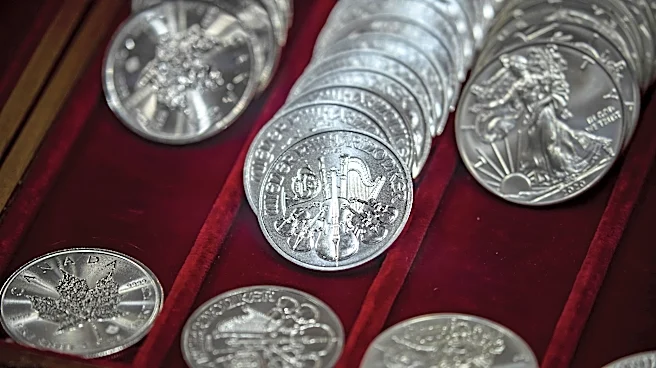
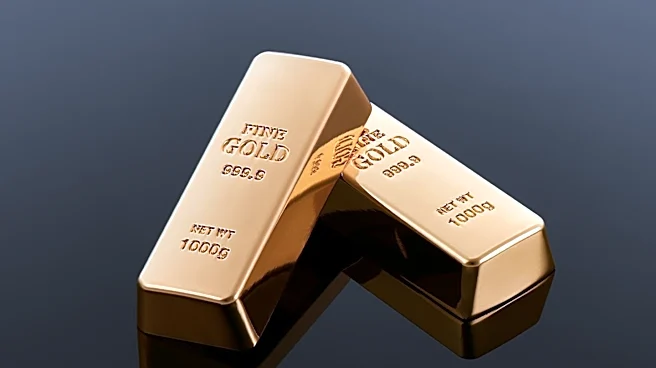
Silver prices have firmed while gold prices have weakened following stronger U.S. labor-market data, which has pushed Treasury yields higher and maintained Federal Reserve rate-hike risks. The recent JOLTS report showed an increase in job openings, reinforcing
expectations of continued economic strength. The situation in the Strait of Hormuz remains a factor, with oil shipments returning to prewar levels but still subject to geopolitical risks. These dynamics have influenced the precious metals market, with silver benefiting from stronger relative momentum.
Why It's Important?
The divergence in silver and gold prices reflects the market's response to economic indicators and geopolitical tensions. Silver's relative strength suggests investor confidence in its role as a hedge against inflation and economic uncertainty. The ongoing situation in the Strait of Hormuz continues to pose risks to global oil supply, which could impact inflation and Federal Reserve policy decisions. These factors are critical for investors as they navigate the complex interplay between economic data, geopolitical events, and market expectations.
What's Next?
Investors will be closely watching upcoming economic reports and Federal Reserve communications for further insights into the direction of interest rates and economic policy. Any developments in the Strait of Hormuz could also influence market sentiment and commodity prices. Traders will need to remain agile, as these factors could lead to shifts in market positioning and investment strategies.