






What's Happening?
The infrastructure supporting large-scale Artificial Intelligence (AI) workloads is creating unprecedented electricity demands that traditional public grids are struggling to meet. This surge in demand is prompting technology operators to increasingly
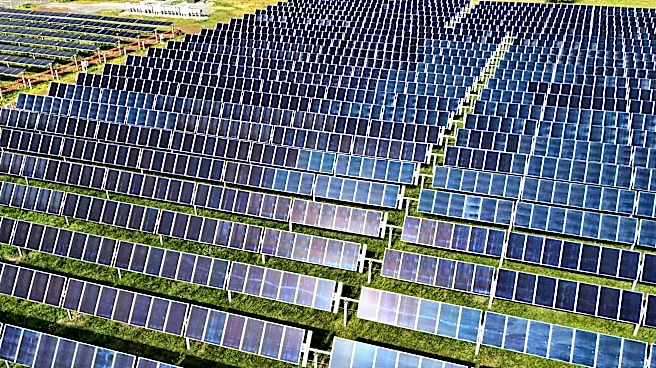
adopt 'behind the meter' power solutions. These solutions involve generating electricity on-site, bypassing the public utility grid entirely. Examples include dedicated solar installations, natural gas generators, and direct power purchase agreements. This shift means that hyperscale AI operators are securing renewable energy capacity through long-term direct agreements, which in turn reduces the availability of clean energy for other buyers. Consequently, organizations across various industries, including manufacturing and logistics, are finding it more challenging to procure sustainable power to meet their own clean energy targets.
Why It's Important?
This development significantly impacts the U.S. clean energy landscape and broader industries. The intense competition for renewable energy capacity, driven by AI data centers, means that other businesses with sustainability commitments face a constrained market. This could slow down the clean energy transition for sectors beyond technology, as available renewable sources are increasingly locked up. Furthermore, the energy intensity of AI operations is becoming a critical factor in sustainability planning and carbon accounting for supply chain leaders. The energy source powering AI tools, even if not directly visible, contributes to a company's Scope 2 emissions, making it a due diligence question for software vendors and a compliance risk for organizations. This necessitates a re-evaluation of energy as a strategic variable rather than just an operational cost.
What's Next?
Supply chain leaders are advised to audit the energy footprint of their AI tools by questioning software vendors about data center locations, energy sources, and verifiable renewable energy commitments. Mapping facility-level energy consumption in warehouses and distribution centers is also crucial for identifying waste and managing costs. Organizations with sustainability targets should proactively engage in clean energy procurement conversations to avoid being outcompeted by AI infrastructure operators. Additionally, businesses are encouraged to leverage their own AI tools for energy efficiency, such as route optimization and demand forecasting, to reduce energy waste and kilowatt-hours. Building energy into supply chain risk frameworks is also essential, as power availability, costs, and carbon pricing are becoming significant operational risks.
Beyond the Headlines
The 'behind the meter' trend highlights a fundamental shift where energy is no longer a background utility cost but a core operational variable. This development has ethical and strategic implications, as the rapid expansion of AI could inadvertently exacerbate energy inequalities if not managed carefully. The increased demand for clean energy by AI data centers could accelerate innovation in renewable energy generation and storage, but it also poses challenges for equitable access. The need for transparent reporting on energy consumption and carbon emissions across the entire supply chain, including software infrastructure, will become paramount. This situation underscores the interconnectedness of technological advancement, environmental sustainability, and economic competitiveness, pushing for a more integrated approach to energy management and policy.