




What's Happening?
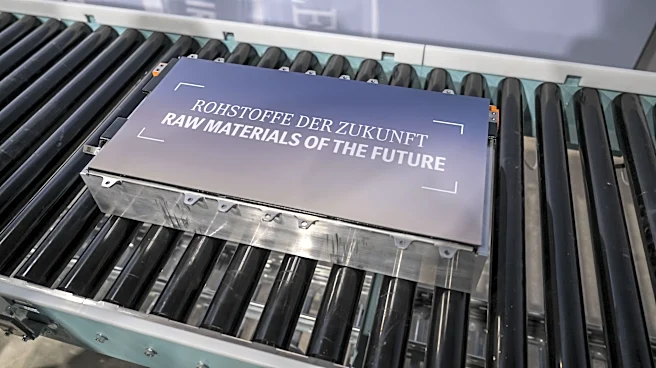
Researchers have successfully tested four commercial nanofiltration membranes for their ability to recover lithium from real spent lithium-ion battery leachates. This work extends previous research that focused on synthetic solutions to more practical
applications. The study, published early on nature.com on November 29, 2026, found that mineral acid leaching produced significantly higher lithium concentrations compared to green organic acid extractions. The membranes demonstrated a preferential transport of monovalent lithium while effectively rejecting competing multivalent ions, a process attributed to a combination of steric hindrance and charge-dependent interactions. The findings indicate that the composition of the leachate plays a crucial role in membrane performance, which will influence the design of future battery recycling processes. Two of the tested membranes, CNF-2 and CNF-3, showed the highest lithium permeation, while CNF-1 and CNF-4 were more effective at rejecting multivalent ions.
Why It's Important?
The successful recovery of lithium from spent batteries is critical for reducing the United States' reliance on newly mined materials, especially as the demand for batteries continues to grow across various sectors, including electric vehicles and renewable energy storage. This research offers a viable pathway to establish a more sustainable and circular economy for battery production. By utilizing commercial membranes, the study moves closer to scalable and cost-effective recycling solutions, potentially mitigating supply chain vulnerabilities and environmental impacts associated with traditional mining. The ability to recover valuable metals like lithium and transition metals from end-of-life batteries could transform the economics of battery manufacturing, making it less dependent on volatile raw material markets. This development could benefit U.S. industries involved in battery production, recycling, and electric vehicle manufacturing by providing a more stable and domestically sourced supply of critical materials.
What's Next?
While the current results are promising, they are derived from laboratory tests, meaning the commercial availability and overall cost-effectiveness of this approach remain to be determined. The next steps will likely involve scaling up these laboratory findings to pilot plant operations to assess their feasibility in an industrial setting. Further research will be needed to optimize membrane selection and process design based on the specific chemistry of different waste streams from spent batteries. Developers in the lithium recovery sector are encouraged to test candidate membranes using real leachates rather than synthetic solutions to ensure practical applicability. The long-term goal is to integrate these nanofiltration technologies into comprehensive battery recycling facilities, contributing to a more robust and sustainable supply chain for battery materials in the U.S. and globally.
Beyond the Headlines
This advancement in lithium recovery technology has broader implications beyond immediate economic benefits. It addresses critical environmental concerns by reducing the need for new mining operations, which often have significant ecological footprints. The development of efficient recycling methods for battery components aligns with global efforts towards a circular economy and sustainable resource management. Ethically, it promotes responsible consumption and production by minimizing waste and maximizing resource utilization. Legally, it could influence future regulations and incentives for battery recycling, potentially leading to stricter mandates for manufacturers and more investment in recycling infrastructure. Culturally, it fosters a shift towards valuing waste as a resource, encouraging innovation in waste management and material science. This technology could also enhance national security by reducing dependence on foreign sources for critical battery materials, thereby strengthening the U.S. position in the global clean energy transition.