




What's Happening?
In November 2026, Tesla opened the order page for its new Cybercab, an invite-only vehicle. Tech influencer Marques Brownlee gained access to the pre-order experience and discovered a non-negotiable $299 monthly subscription fee, which is required to operate
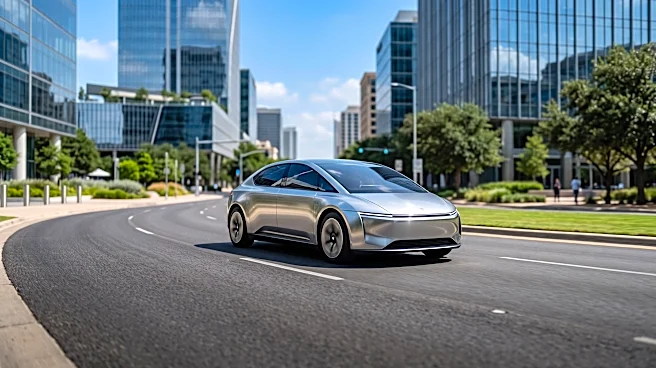
the vehicle. This subscription is similar to existing self-driving Tesla subscriptions, but unlike those, the Cybercab lacks a steering wheel, meaning users cannot operate it manually if they choose to cancel the subscription. The Cybercab itself is priced at $29,990, significantly lower than the Tesla Model Y, which starts at $39,990. However, the delivery method is restricted, with initial rollouts in December 2026 limited to Austin, Dallas, Houston, San Antonio, and Fort Worth in Texas. These cities are already home to existing Robotaxi fleets, leaving other cities with Robotaxis, such as Miami, Orlando, and Tampa, without immediate access, along with potential buyers outside of Texas or Florida.
Why It's Important?
The mandatory $299 monthly subscription for the Tesla Cybercab introduces a new financial model for vehicle ownership, blurring the lines between a traditional car purchase and a paid AI service. This approach could significantly impact consumer expectations regarding vehicle autonomy and ownership costs. While the initial purchase price of $29,990 is relatively low for an electric vehicle, the recurring subscription fee adds a substantial long-term expense, potentially making the Cybercab less accessible or appealing to a broader market. The limited delivery to specific Texas cities also suggests a strategic rollout focused on areas with existing Robotaxi infrastructure, potentially testing the market for subscription-based autonomous vehicles in controlled environments. This model could influence how other automotive manufacturers approach autonomous vehicle sales and services in the future, potentially shifting the industry towards more subscription-based offerings.
What's Next?
Following Marques Brownlee's preview, numerous responses have emerged, including a comment from Elon Musk, indicating ongoing discussion and potential clarifications regarding the Cybercab's pricing and operational model. The initial rollout in December 2026 will be critical in assessing the market's reception to a vehicle with a mandatory operational subscription and limited geographical availability. Tesla will likely monitor user feedback and subscription uptake in the designated Texas cities to inform future expansion plans. The success or challenges faced by the Cybercab's subscription model could set a precedent for the broader autonomous vehicle industry, influencing regulatory discussions and consumer protection policies related to vehicle functionality tied to recurring payments. Further details from Tesla or Elon Musk regarding the subscription's long-term value and potential for broader availability are anticipated.
Beyond the Headlines
The Cybercab's mandatory subscription model raises deeper questions about the future of vehicle ownership and the increasing integration of AI services into everyday products. By making the vehicle inoperable without the subscription, Tesla is essentially selling access to a service rather than just a product, which could have significant legal and ethical implications regarding consumer rights and product functionality. This model could lead to debates about the 'right to repair' and the extent to which manufacturers can control the long-term use of purchased goods. Furthermore, the lack of a steering wheel in the Cybercab highlights a complete reliance on autonomous technology, pushing the boundaries of human-machine interaction and potentially accelerating the shift towards fully autonomous transportation. This could also influence urban planning and infrastructure development in cities where such vehicles become prevalent.