





What's Happening?
Fortinet, Inc., headquartered in Sunnyvale, California, is a leading provider of cybersecurity and networking solutions globally. The company offers a comprehensive suite of products and services designed to address evolving cybersecurity threats and facilitate
the convergence of networking and security. Key offerings include FortiOS, a unified operating system, and FortiASIC application-specific integrated circuit (ASIC)-based security processing units. Fortinet also provides cloud-based solutions like FortiCloud, a private cloud software-as-a-service platform, and FortiAI, which delivers dual-layered defense across the Fortinet Security Fabric. Their portfolio extends to secure networking solutions, network firewall solutions such as FortiGate for data centers and hyperscale environments, and wireless local area network solutions. Additionally, Fortinet offers FortiEndpoint for converged secure connectivity and endpoint protection, and OT Security to safeguard engineered systems underpinning infrastructure and supply chains. The company's commitment to advanced security is further demonstrated through its AI-driven security operation solutions, including FortiEDR, FortiXDR, FortiNDR, FortiSandbox, FortiDeceptor, FortiDLP, and FortiRecon. Fortinet also maintains FortiGuard Labs, a cybersecurity threat intelligence and research organization, and provides FortiCare technical support services.
Why It's Important?
Fortinet's extensive range of cybersecurity and networking solutions plays a critical role in protecting U.S. businesses, infrastructure, and supply chains from sophisticated cyber threats. As cyberattacks become more frequent and complex, the demand for robust and integrated security platforms like those offered by Fortinet is increasing. The company's focus on converging networking and security helps organizations streamline their IT operations, reduce complexity, and enhance their overall security posture. This integration is particularly vital for sectors like critical infrastructure and manufacturing, where operational technology (OT) security is paramount. By providing AI-driven security operations and advanced threat intelligence through FortiGuard Labs, Fortinet empowers organizations to detect, prevent, and respond to threats more effectively. This not only safeguards sensitive data and intellectual property but also ensures business continuity and resilience against disruptive cyber incidents, impacting economic stability and national security.
What's Next?
Fortinet is expected to continue innovating and expanding its cybersecurity and networking portfolio to address emerging threats and technological advancements. The company's ongoing investment in AI-driven security solutions and its focus on the convergence of networking and security suggest a future where integrated, intelligent platforms will be central to enterprise security strategies. As organizations increasingly adopt cloud-native applications and hybrid work models, Fortinet's cloud security offerings and secure access service edge (SASE) solutions are likely to see further development and adoption. The company's role in protecting critical infrastructure through its OT Security solutions will also remain a key area of focus, especially given the rising geopolitical tensions and the potential for state-sponsored cyberattacks. Fortinet's research through FortiGuard Labs will continue to provide valuable threat intelligence, influencing the development of new security features and services to stay ahead of cybercriminals.
Beyond the Headlines
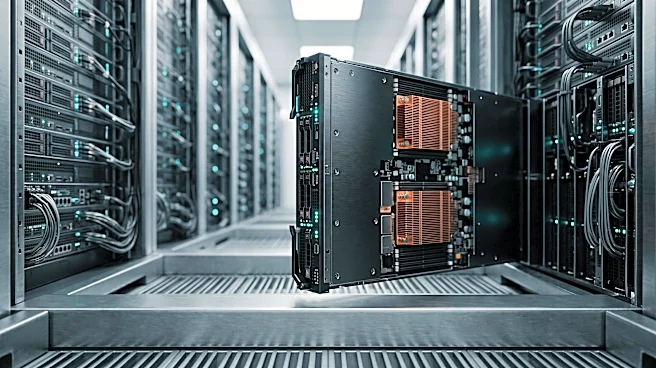
The comprehensive nature of Fortinet's offerings highlights a broader industry trend towards consolidation and integration in cybersecurity. Instead of relying on disparate point solutions, organizations are increasingly seeking unified platforms that can provide end-to-end security across their entire digital footprint. This shift is driven by the need for simplified management, improved threat visibility, and more effective incident response. Fortinet's emphasis on FortiASIC-based security processing units also underscores the importance of hardware acceleration in achieving high-performance security, particularly for demanding environments like data centers and hyperscale networks. Furthermore, the company's commitment to OT Security reflects a growing recognition of the unique challenges and vulnerabilities associated with industrial control systems and critical infrastructure. The ethical implications of AI-driven security, such as data privacy and algorithmic bias, will likely become more prominent as these technologies become more sophisticated and pervasive in protecting sensitive information and critical operations.