







What's Happening?
Ambrosia Energy has commenced construction on a 10 GWh battery factory near Austin, Texas. This facility is designed to produce batteries specifically for Ambrosia’s off-grid data center power plants. Co-founder and CEO Ben Longmier announced the project
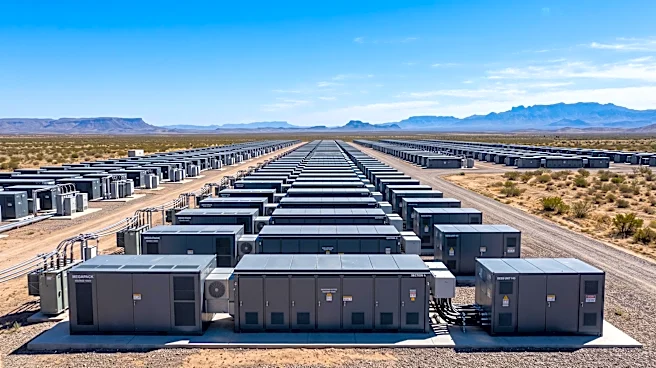
at TechCrunch Disrupt, stating that the 150,000-square-foot factory is expected to reach full production within two to three years. The company anticipates that the factory will enable it to build approximately one 300-megawatt power plant per year at its field sites. Ambrosia Energy emerged from stealth in June with a plan to construct power plants for data centers at a cost of $100 per megawatt-hour, utilizing solar power paired with batteries as the most cost-effective and rapidly deployable solution. The company is also starting work on its first commercial power plant in West Texas later this year, which will combine 300 megawatts of solar panels with 660 megawatt-hours of batteries to provide 30 megawatts of continuous power with a target of 99.3% uptime.
Why It's Important?
This initiative by Ambrosia Energy is a significant development in addressing the escalating energy demands of data centers, particularly those driven by artificial intelligence. By establishing a dedicated battery manufacturing facility, Ambrosia aims to vertically integrate its supply chain, reduce costs, and accelerate the deployment of off-grid power solutions. The target cost of $100 per megawatt-hour makes their solar-plus-battery approach competitive with traditional natural gas turbines, which many hyperscalers currently plan to use. This could lead to a substantial shift in how data centers are powered, promoting greater reliance on renewable energy and enhancing energy independence. The project also underscores Texas's growing role as a hub for energy innovation and manufacturing. For the U.S. energy sector, this represents a move towards more decentralized and resilient power infrastructure, reducing the strain on conventional grids and contributing to decarbonization efforts. The success of Ambrosia's model could influence other tech companies and energy providers to adopt similar strategies for powering energy-intensive operations.
What's Next?
Over the next two to three years, Ambrosia Energy will focus on bringing its 10 GWh battery factory in Texas to full production capacity. Concurrently, the company will begin construction on its first commercial power plant in West Texas later this year, aiming for 99.3% uptime for its data center clients. The performance and cost-effectiveness of this pilot plant will be crucial in validating Ambrosia's model and attracting further investment and partnerships. The company's strategy of simplifying components and manufacturing many in-house will be key to achieving its cost targets. If successful, Ambrosia Energy could become a significant player in providing sustainable and reliable power solutions for the rapidly expanding data center industry, potentially influencing the broader energy market and the development of off-grid infrastructure across the U.S. The project's progress will be closely watched by both the tech and energy sectors.
Beyond the Headlines
Ambrosia Energy's venture into large-scale battery manufacturing for off-grid data centers signifies a profound shift in how critical infrastructure can be powered, moving away from traditional grid reliance. This development has deeper implications for energy security and resilience, as it reduces the vulnerability of data centers to grid failures and fluctuations. The emphasis on vertical integration and in-house manufacturing to cut costs also points to a broader trend in the renewable energy sector towards greater control over the supply chain and innovation in production processes. Ethically, this model could accelerate the decarbonization of the tech industry, which has a significant carbon footprint due to its energy demands. Culturally, it challenges the conventional wisdom of centralized power generation, promoting a more distributed and localized energy paradigm. In the long term, if successful, this approach could inspire similar off-grid solutions for other energy-intensive industries, fostering a more sustainable and robust energy ecosystem across the U.S. and potentially globally.