

What's Happening?
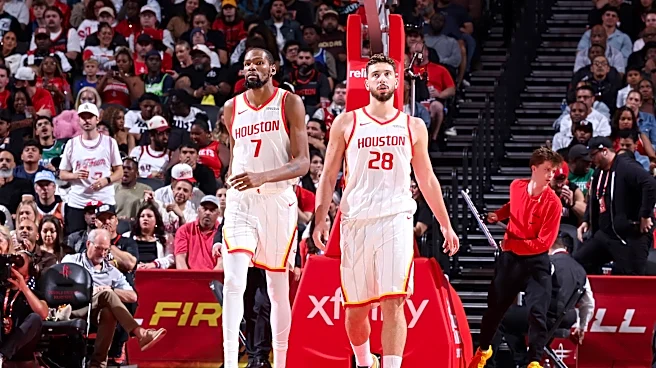
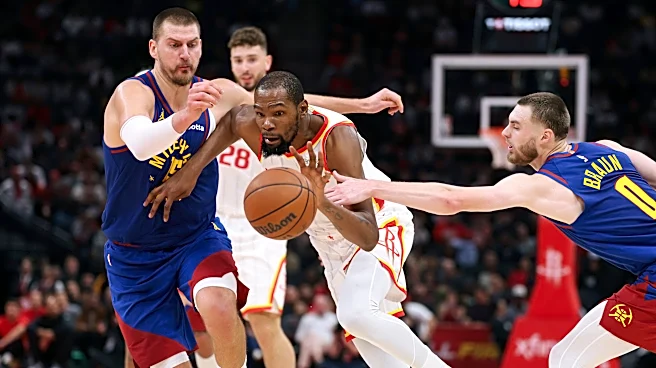
The Houston Rockets, currently holding the fourth spot in the Western Conference with an 8-3 record, are evaluating the role of forward Kevin Durant. While Durant has been a pivotal part of the team's strong start, his individual production has begun
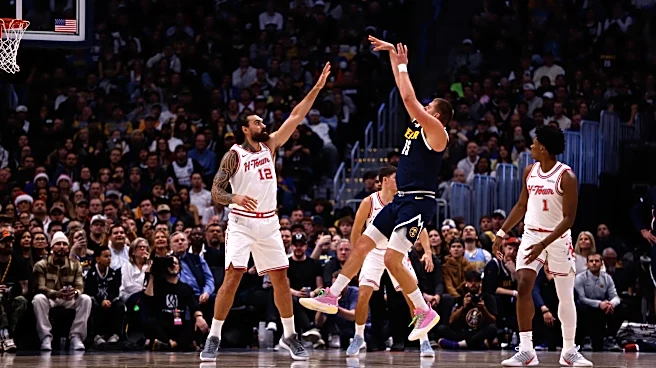
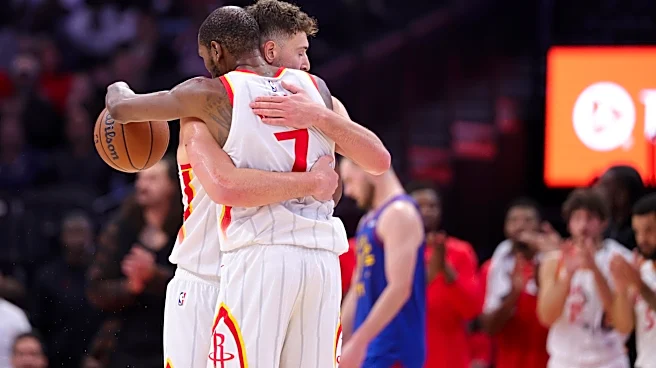
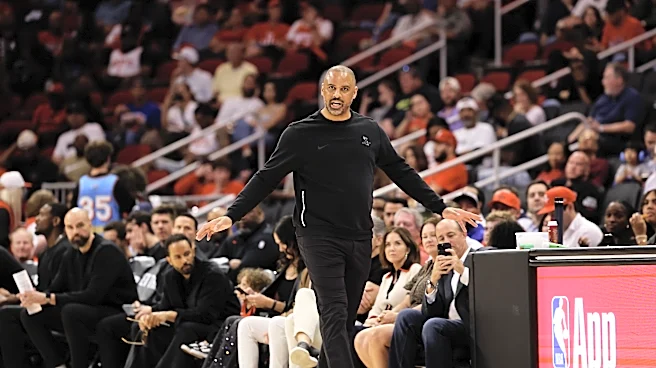
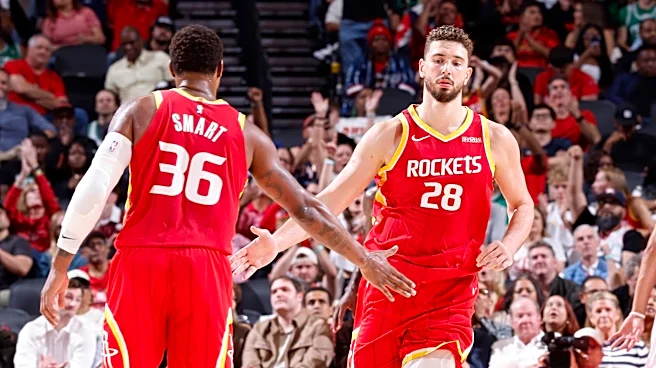
to dip. This season, Durant is averaging 21.0 points, 6.3 rebounds, and 3.5 assists per game, a decrease from his career average of over 25 points per game since his sophomore year. Rockets head coach Ime Udoka has already indicated an interest in decreasing Durant’s minutes. The team's young core, including Alperen Sengun and Jabari Smith Jr., has shown significant maturity and strong scoring performances, and Fred VanVleet has returned to the starting lineup. This development suggests that Durant may not need to be the primary scorer every night for the team to succeed, allowing him to serve as a formidable offensive weapon whose presence can create spacing for other players.
Why It's Important?
This potential shift in Kevin Durant's role is significant for the Houston Rockets as it reflects a strategic evolution in team dynamics and offensive philosophy. By potentially reducing Durant's scoring burden, the Rockets aim to foster the development of their young talent and distribute offensive responsibilities more broadly. This approach could lead to a more resilient and less predictable offense, as opponents would need to contend with multiple scoring threats rather than focusing solely on Durant. For the team's younger players like Alperen Sengun and Jabari Smith Jr., taking on increased offensive roles could accelerate their growth and confidence, positioning them as future cornerstones of the franchise. Furthermore, managing Durant's minutes and offensive load could help preserve his health and effectiveness for crucial moments later in the season and during potential playoff runs, extending his impact on the team's long-term success. This strategy also signals a commitment to building a sustainable, deep roster rather than relying heavily on one superstar.
What's Next?
The Houston Rockets are expected to continue monitoring Kevin Durant's performance and the overall team dynamic as they progress through the season. Coach Ime Udoka's expressed interest in decreasing Durant's minutes suggests that a more formalized plan for load management or a reduced offensive role could be implemented. This might involve strategic resting during back-to-back games or a more consistent distribution of shot attempts among the team's emerging scorers. The team will likely observe how the young core, particularly Alperen Sengun and Jabari Smith Jr., continues to perform with increased offensive opportunities. The success of this strategy will be crucial in determining whether Durant's role is further reduced or if he is called upon to elevate his scoring when the situation demands it, especially in high-stakes games later in the season. The team's performance in upcoming matchups against strong Western Conference opponents will provide further insights into the effectiveness of their evolving offensive structure.
Beyond the Headlines
The discussion around Kevin Durant's role with the Houston Rockets extends beyond immediate game strategies, touching upon broader trends in professional basketball regarding veteran superstars and team building. In an era where load management and player longevity are increasingly prioritized, the Rockets' approach could set a precedent for how teams integrate aging, high-caliber players with developing young talent. This situation highlights the delicate balance between maximizing a star's individual output and cultivating a cohesive, future-oriented team identity. Ethically, it raises questions about player agency versus team objectives, especially for a player like Durant who has historically been against lower minutes. Culturally, it could shift perceptions of what constitutes a 'leading role' for a superstar, moving towards a more facilitative and impactful presence rather than solely a high-volume scorer. This strategic pivot could influence how other NBA franchises manage their veteran stars and nurture their young prospects, potentially leading to a league-wide re-evaluation of roster construction and player utilization.