





What's Happening?
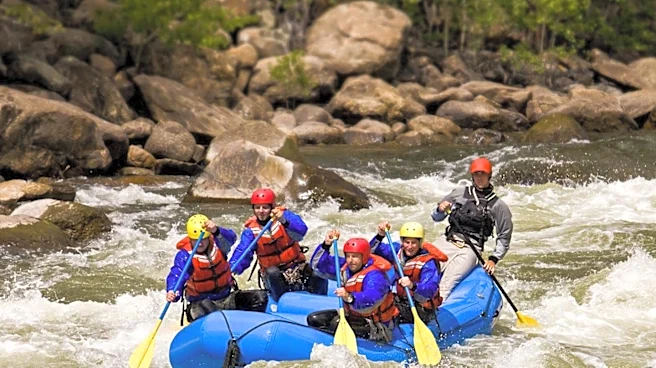
The Kaweah River in California is recognized as a premier whitewater rafting destination, featuring rapids classified as Class IV+ with sections reaching Class V. Originating in Sequoia National Park, the river descends over 10,000 feet from its headwaters
at 13,000 feet above sea level to near sea level in the San Joaquin Valley. This dramatic elevation drop, averaging 70 feet per mile, creates a challenging environment for rafters. The river's course includes three main forks—North, Middle, and South—with the North Fork presenting the most difficult rapids, often exceeding Class V. Notable rapids include ominously named sections like Suicide Falls. Due to the steep drop-offs, large rock obstacles, and significant water flow during spring, the Kaweah River is recommended primarily for experienced rafters. Much of the land surrounding the river outside Sequoia National Park is privately owned, making access points limited. The river also plays a crucial role in flood control, with the Terminus Dam constructed by the US Army Corps of Engineers, and provides irrigation for agriculture in the Kaweah Delta.
Why It's Important?
The Kaweah River's classification as a Class IV+ to Class V whitewater rafting experience highlights its significance within the adventure tourism sector in the United States. Such challenging rivers attract a specific demographic of experienced rafters, contributing to local economies through tourism, gear sales, and guide services. The river's demanding nature also underscores the importance of specialized skills and safety protocols in whitewater sports. Furthermore, the river's dual role in recreation and essential resource management—providing flood control via the Terminus Dam and irrigation for agriculture in the San Joaquin Valley—illustrates the complex interplay between natural resources, human infrastructure, and economic activity. The need for experienced rafters and the limited access due to private land ownership also point to potential discussions around public access to natural recreational areas and the management of high-risk outdoor activities.
What's Next?
As the Kaweah River continues to be a draw for whitewater rafting enthusiasts, ongoing efforts will likely focus on managing safety for rafters and maintaining the river's ecological health. Given its challenging nature, whitewater rafting associations will continue to emphasize the need for experienced participants and potentially advocate for enhanced safety measures or guidelines. For local communities, the river will remain a key natural asset, balancing recreational opportunities with its critical role in water management for agriculture and flood control. Future considerations might involve discussions between private landowners, recreational groups, and conservation districts regarding access points and sustainable use of the river. The Kaweah Delta Water Conservation District will also continue to manage water flow for irrigation, adapting to varying rates from the river and utilizing groundwater to supplement supply, ensuring agricultural stability in the region.
Beyond the Headlines
The Kaweah River's extreme rapids and the associated risks bring to light broader discussions about the ethics of adventure sports and the balance between thrill-seeking and safety. The river's classification, with sections reaching Class V, places it among the most dangerous and rarely run rapids, prompting questions about individual responsibility and the role of guiding services in mitigating inherent dangers. Moreover, the river's journey from pristine national park headwaters through agricultural lands to its delta highlights the intricate relationship between conservation, recreation, and economic development. The historical context of the Terminus Dam, built for flood control after significant damage, underscores the long-term human effort to manage natural forces. This also touches upon the cultural significance of rivers, from their Native American naming origins to their modern-day use for both sustenance and recreation, reflecting evolving human interactions with natural landscapes.