

What's Happening?
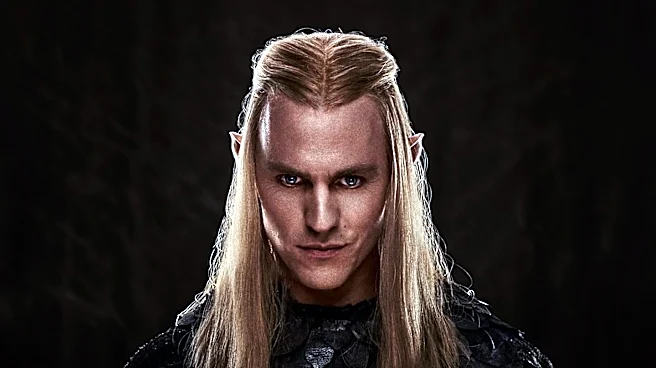
The Lord of the Rings: The Rings of Power is set to undergo significant changes in its third season, which will premiere on November 11. Co-showrunner Patrick McKay revealed that Season 3 will feature a five-year time jump, placing the narrative after
the events of Season 2, where Sauron shed his disguise and his armies overran Middle-earth. This time jump is intended to offer a fresh start for viewers, dropping them directly into the action and allowing for a 'soft reboot' of the series. Additionally, the new season will introduce a complex Orc character named Marnûkh, dubbed 'the Orc with an arc,' who claims to be a defector from Sauron's army and seeks to aid the Elves. This character challenges traditional depictions of Orcs, presenting them with more nuanced motivations and personalities.
Why It's Important?
The strategic time jump in 'The Rings of Power' Season 3 is a critical move to re-engage audiences and potentially address criticisms or pacing issues from previous seasons. By fast-forwarding five years, the showrunners aim to immerse viewers directly into a more advanced stage of the conflict with Sauron, focusing on the immediate consequences of his rise to power and the forging of the One Ring. This approach could revitalize the narrative, offering new dynamics and higher stakes. The introduction of Marnûkh, an Orc with a complex backstory and potentially ambiguous loyalties, is particularly significant. It represents a departure from the more one-dimensional portrayal of Orcs in previous adaptations, adding moral complexity and challenging audience perceptions within the 'Lord of the Rings' universe. This could deepen the show's thematic exploration and attract viewers interested in more intricate character development.
What's Next?
As 'The Rings of Power' Season 3 approaches its November 11 premiere, anticipation will build around how the five-year time jump reshapes the narrative and character arcs. Viewers will closely watch the introduction of Marnûkh and his interactions with established characters like Galadriel and Arondir, questioning his true intentions and impact on the war against Sauron. The showrunners' decision to 'blow the doors off the hinges' suggests a more intense and action-packed season. The success of this 'soft reboot' and the audience's reception to the new narrative direction and character complexities will be crucial for the long-term future of the series. The production team will continue to leverage their extensive prosthetics and world-building efforts to bring these new elements to life.
Beyond the Headlines
The creative decisions for 'The Rings of Power' Season 3, particularly the time jump and the nuanced portrayal of an Orc character, reflect broader trends in fantasy storytelling. Modern adaptations often seek to expand upon established lore, introducing moral ambiguities and complex character motivations that were less prominent in earlier works. By giving an Orc an 'arc,' the series delves into themes of redemption, deception, and the nature of good versus evil, moving beyond simplistic binaries. This approach can resonate with contemporary audiences who appreciate more sophisticated narratives. Furthermore, the show's reliance on Tolkien's appendices and background lore, rather than direct adaptations, highlights the creative freedom showrunners have in expanding beloved universes, while still aiming to remain faithful to the spirit of the original author's vision. This balance between innovation and tradition is a constant challenge in adapting iconic fantasy works.