




What's Happening?
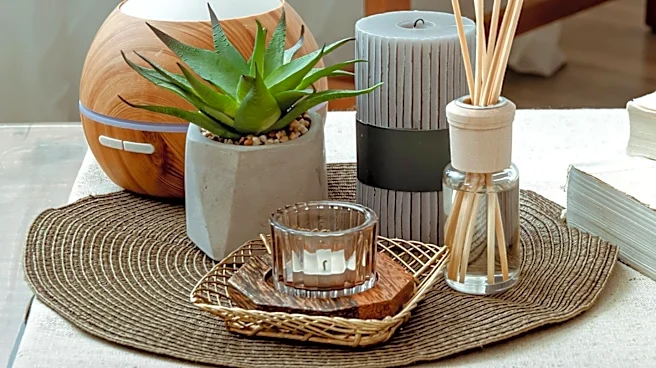
Home fragrance rituals are increasingly recognized as integral to personal well-being and self-expression. Companies like Diptyque are offering personalized scented rituals through their home fragrance diffuser collections, allowing consumers to curate
unique atmospheric experiences. Floward has introduced a home scent personality quiz to help individuals discover fragrances that align with their personal atmosphere and lifestyle. This trend signifies a broader shift within the fragrance industry, moving beyond traditional perfumes to encompass home scents, candles, incense, essential oils, aromatherapy, and wellness rituals. The focus is shifting from mere ownership of a scent to exploration, mood, memory, and personal meaning, reflecting a new era of identity and innovation in fragrance use.
Why It's Important?
This evolution in home fragrance is important because it reflects a significant cultural shift in how consumers perceive and interact with scents. It moves fragrance from a luxury item or simple air freshener to a tool for self-care, emotional connection, and personal identity. For U.S. industries, this means new market opportunities for brands that can offer personalized, experience-driven, and wellness-focused home fragrance products. Retailers and manufacturers stand to gain by developing innovative formats, such as diffusers, smart home scenting devices, and customizable fragrance blends. Consumers benefit from a wider array of products that enhance their living spaces and contribute to their mental and emotional well-being, transforming their homes into personalized sanctuaries. The emphasis on 'ritual' also suggests a deeper engagement with products, potentially leading to increased brand loyalty and repeat purchases.
What's Next?
The home fragrance market is expected to continue its growth trajectory, driven by consumer demand for personalized and wellness-oriented products. We can anticipate further innovations in scent delivery systems, including smart diffusers integrated with home automation, and more sophisticated fragrance compositions that cater to specific moods and occasions. Brands will likely invest more in digital tools, such as AI-powered recommendation systems and interactive quizzes, to guide consumers in their scent discovery journey. The convergence of artistic perfumery, wellness, and home fragrance will lead to cross-category collaborations and unique product offerings. Retail experiences will also evolve, becoming more immersive and sensory, allowing consumers to explore and connect with scents on a deeper, more personal level. This trend will likely see an increase in subscription services for home fragrances, offering curated selections tailored to individual preferences.
Beyond the Headlines
The deeper implication of this trend lies in the psychological and cultural significance of scent. Historically, scent has been linked to memory, emotion, and ritual across various cultures. The modern embrace of home fragrance rituals taps into this innate human connection, allowing individuals to consciously shape their environment and emotional state. This shift also highlights a growing desire for authenticity and self-expression in consumer choices, moving away from mass-market trends towards niche and artisanal products that resonate on a personal level. Ethically, this raises questions about the sourcing of ingredients and the environmental impact of fragrance production, pushing brands towards more sustainable and transparent practices. Culturally, it signifies a broader integration of sensory experiences into daily life, transforming mundane routines into meaningful rituals that enhance overall quality of life.