








What's Happening?
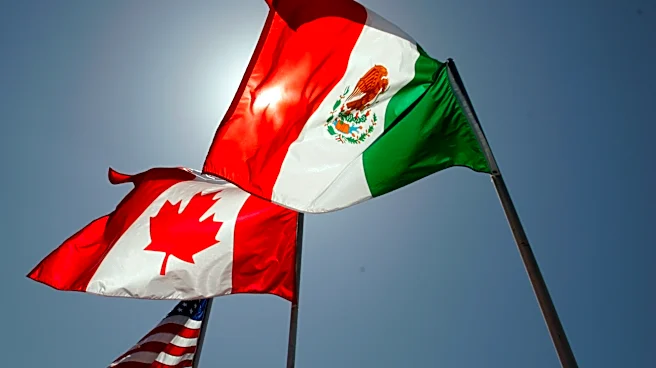
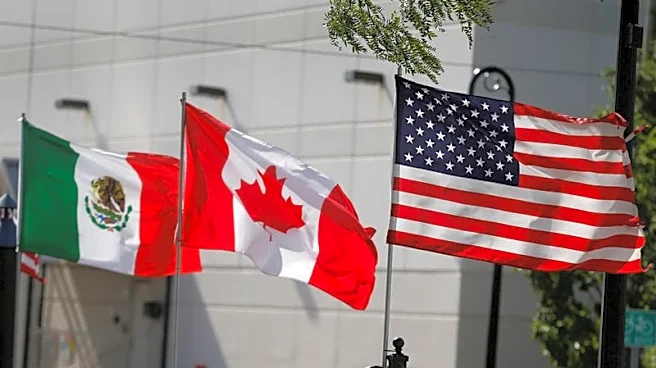
The United States-Mexico-Canada Agreement (USMCA) is undergoing a significant shift as the U.S. moves away from a long-term deal towards annual reviews and potential renegotiations. This change is causing investors to reassess their strategies concerning
companies involved in North American supply chains, particularly those in U.S. domestic manufacturing. The focus is on stocks with strong business fundamentals that can withstand policy fluctuations. Companies like Alamo Group, Franklin Electric, and Boise Cascade are highlighted for their robust financial health and market strength. Alamo Group, for instance, benefits from its U.S.-based manufacturing and domestic customer base, reducing its exposure to potential new tariffs. Franklin Electric offers exposure to U.S. water and fuel infrastructure with minimal cross-border friction, while Boise Cascade provides targeted exposure to U.S. construction and remodeling through its engineered wood products and distribution network.
Why It's Important?
The shift in USMCA policy could have significant implications for U.S. manufacturing and trade. Companies with strong domestic operations and minimal reliance on cross-border supply chains may be better positioned to navigate potential tariff changes. This could lead to a reevaluation of investment strategies, with a focus on firms that demonstrate resilience in the face of trade policy volatility. The highlighted companies, with their strong financial positions and strategic market focus, may offer attractive opportunities for investors seeking stability amid uncertainty. However, challenges such as profit margin pressures, management changes, and sensitivity to government spending cycles remain critical factors to consider.
What's Next?
As the USMCA review process unfolds, companies will need to adapt to potential changes in trade policies. Investors will likely monitor these developments closely, assessing how companies manage cost controls, pricing strategies, and market expansions. The ability of these firms to maintain strong financial health and adapt to policy shifts will be crucial. Additionally, the broader impact on U.S. manufacturing and trade relations with Canada and Mexico will be a key area of focus, influencing future investment decisions and economic strategies.