
What's Happening?
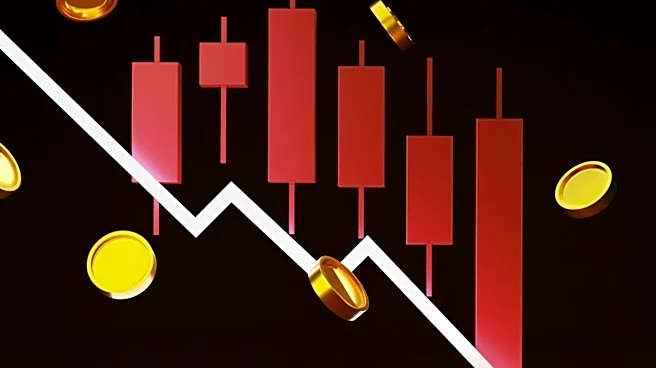
Gold prices experienced their worst weekly loss since March, with spot gold tumbling as much as 3% towards US$3,500 an ounce, and U.S. gold futures falling nearly 4% to as low as US$3,514 an ounce. This
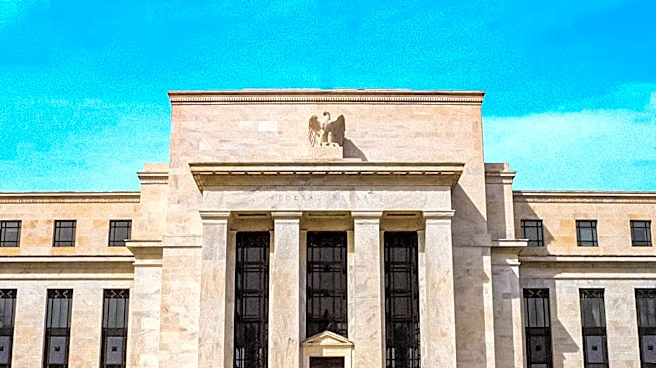
puts gold on track for an 8% weekly loss. The sharp decline is primarily attributed to a series of hawkish comments from Federal Reserve officials, intensifying expectations that the U.S. central bank will continue raising interest rates to combat inflation. Fed Governor Christopher Waller suggested a potential 50-basis-point rate hike in December, exceeding market expectations of 25 basis points. Philadelphia Fed President Anna Paulson also highlighted inflation risks. Higher borrowing costs make gold less attractive compared to interest-bearing assets, and a stronger U.S. dollar further pressures the metal. The rout has pushed gold decisively below US$4,000 an ounce, a level previously considered a potential price floor by many investors.
Why It's Important?
The significant drop in gold prices, driven by the Federal Reserve's hawkish stance, has direct implications for U.S. investors and the broader economy. As interest rates rise, the opportunity cost of holding non-yielding assets like gold increases, making interest-bearing investments more appealing. This shift in investor preference can lead to capital outflows from gold, impacting its market value. For U.S. consumers, a stronger dollar, often a consequence of higher interest rates, can make imports cheaper but also makes U.S. exports more expensive, affecting trade balances. The Federal Reserve's aggressive approach to inflation signals its commitment to price stability, which, while potentially curbing inflation, could also lead to tighter financial conditions and impact economic growth. The gold market's reaction serves as a barometer for investor sentiment regarding inflation, interest rates, and the overall economic outlook.
What's Next?
The gold market will remain highly sensitive to future statements and actions by the Federal Reserve. Investors will be closely watching the December Federal Open Market Committee (FOMC) meeting for decisions on interest rate hikes and any forward guidance on monetary policy. Continued hawkishness from the Fed could sustain downward pressure on gold prices, while any signs of a pivot towards less aggressive tightening could provide some relief. The elevated U.S. Treasury yields, with the benchmark 10-year yield hovering around 5%, will also continue to influence gold's attractiveness. Analysts are also observing whether the current decline is due to a 'liquidity vacuum' rather than widespread liquidation, suggesting that market dynamics could shift rapidly with changes in trading volume.
Beyond the Headlines
The sharp decline in gold prices, despite a lack of widespread liquidation by major investors, suggests that market liquidity and trading dynamics play a crucial role in amplifying price movements during periods of uncertainty. Deutsche Bank's head of metals strategy, Daniel Ghali, attributed the swings to a 'liquidity vacuum,' where limited observable flows can lead to steep price actions. This highlights a potential vulnerability in financial markets where thin liquidity can exacerbate volatility. Furthermore, the strengthening physical gold demand in India and China, as lower prices attract bargain hunters, indicates a divergence between speculative market behavior and underlying physical demand. This suggests that while short-term price movements are influenced by monetary policy and market sentiment, gold's long-term value as a store of wealth may still be recognized in certain regions.