









What's Happening?
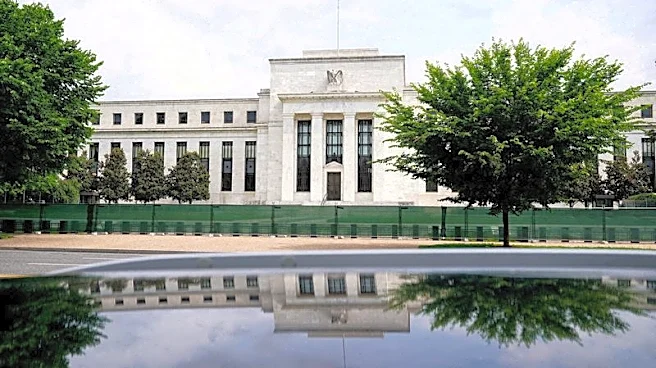
The Federal Reserve's Federal Open Market Committee (FOMC) has decided to keep the federal funds rate steady at a range of 3.5% to 3.75%. This decision was made unanimously by the committee members, marking the first unanimous vote since last June. The decision comes
amidst ongoing economic expansion, despite uncertainties partly due to the conflict in the Middle East. The committee noted strong productivity growth and capital investment, with job gains keeping pace with the workforce. However, inflation remains above the committee's 2% target, driven by supply shocks affecting sectors like energy.
Why It's Important?
The decision to maintain interest rates reflects the Federal Reserve's cautious approach in balancing economic growth with inflation control. By keeping rates steady, the Fed aims to support continued economic expansion while monitoring inflationary pressures. This decision impacts various stakeholders, including businesses and consumers, as borrowing costs remain stable. The ongoing conflict in the Middle East and its impact on energy prices add complexity to the Fed's policy considerations. The Fed's commitment to price stability is crucial for maintaining economic confidence and preventing runaway inflation.
What's Next?
The Federal Reserve will continue to monitor economic indicators and global events, particularly the situation in the Middle East, which could influence future policy decisions. The committee's focus will remain on achieving its dual mandate of maximum employment and price stability. Future meetings will assess whether adjustments to the interest rate are necessary, depending on economic developments and inflation trends.