

What's Happening?
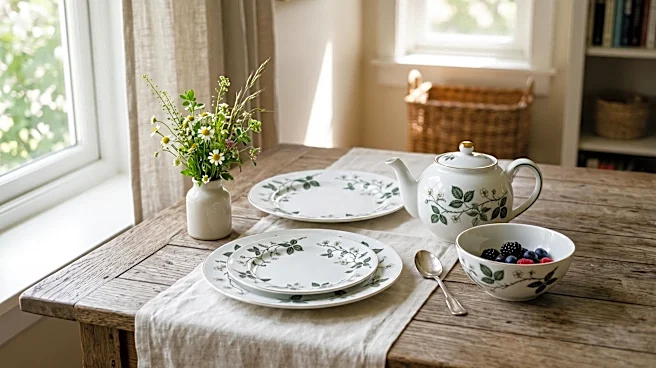
Marks & Spencer's "Autumn Leaves" tableware, a well-known discontinued pattern, continues to be sought after in the pre-loved market. This design, recognized for its white bramble-flower motif, was a popular offering from Marks & Spencer, also associated
with the St Michael name. It is considered one of the retailer's most recognizable discontinued tableware designs, alongside Marks & Spencer Harvest. The range was extensively available, encompassing dinner, tea, and coffee pieces, as well as serving and pouring ware. Its popularity also led to the production of complementary items such as melamine accessories, cork mats, coasters, napkins, and tablecloths, making it a practical pattern for those looking to rebuild or expand their sets. Due to its discontinued status, replacement pieces are primarily found through the secondary market, with availability varying for items like plates, bowls, cups, mugs, and teapots.
Why It's Important?
The continued demand for discontinued Marks & Spencer tableware like "Autumn Leaves" highlights a significant trend in consumer behavior and the secondary market for household goods. This sustained interest indicates that consumers value durability, classic design, and the sentimental connection to familiar brands. For Marks & Spencer, it underscores the lasting impact of their past product lines and the brand loyalty they cultivated. The existence of a robust pre-loved market for such items also suggests a broader shift towards sustainability and circular economy principles, where consumers opt for extending the life of products rather than always purchasing new ones. This trend can influence current manufacturers to consider the long-term appeal and potential for secondary market value of their products, potentially impacting design choices and material quality to ensure longevity.
What's Next?
The ongoing demand for discontinued patterns like "Autumn Leaves" suggests that the secondary market for vintage and pre-loved tableware will likely continue to thrive. Retailers specializing in replacement china, such as MrPottery, will continue to play a crucial role in connecting buyers with these items, organizing stock by pattern, shape, and color to facilitate searches. This sustained interest could also encourage other brands to explore strategies for managing their discontinued product lines, potentially through official resale programs or partnerships with secondary market platforms. For consumers, the availability of these items ensures that they can complete existing sets or acquire pieces of a beloved design, contributing to a more sustainable consumption model by extending the lifecycle of household goods.
Beyond the Headlines
The enduring popularity of Marks & Spencer's "Autumn Leaves" tableware reflects more than just a preference for a particular design; it speaks to a cultural appreciation for heritage, quality, and the tangible memories associated with household items. In an era of rapid consumption and disposable goods, the desire to acquire or maintain pieces from a discontinued line suggests a counter-trend towards valuing longevity and sentimental attachment. This phenomenon also touches upon the concept of 'slow consumption,' where items are chosen for their lasting appeal and ability to integrate into daily life over many years. The secondary market, in this context, acts as a custodian of design history and a facilitator of sustainable practices, allowing cherished items to find new homes and continue their functional and aesthetic lives, thereby reducing waste and fostering a deeper connection between consumers and their possessions.