







What's Happening?
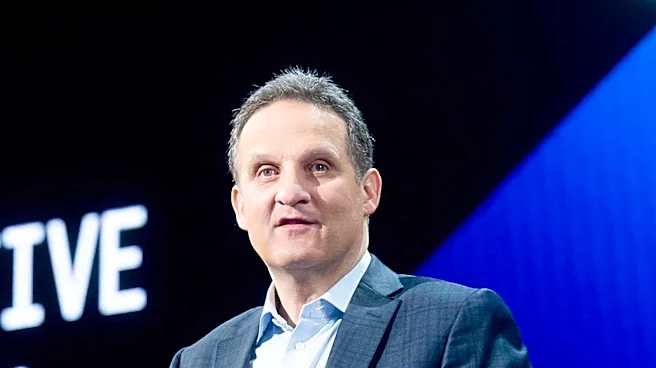
Brian Armstrong, CEO of Coinbase, has stated his strong belief that the x402 payment protocol will become the standard for artificial intelligence (AI) agents. On August 18, Armstrong posted on X (formerly Twitter) that 'x402 will eventually become the norm.'
He elaborated that AI agents, which he expects to eventually outnumber humans, will require a mechanism to make payments for services and goods. The x402 protocol is an open payment system built on HTTP 402, also known as 'Payment Required.' Its primary function is to enable AI agents to automatically pay for Application Programming Interfaces (APIs) and various digital services. This protocol is designed to facilitate stablecoin-based on-chain payments, allowing for instant transactions without the need for separate accounts or subscriptions. This development is seen as crucial for the emerging AI economy, where autonomous agents will frequently interact with and pay for digital resources.
Why It's Important?
The widespread adoption of the x402 protocol, as predicted by Coinbase CEO Brian Armstrong, could significantly impact the U.S. technology and financial sectors. By providing a standardized, automated payment system for AI agents, x402 addresses a critical need for the burgeoning AI economy. Currently, traditional payment methods are not optimized for the high-frequency, low-value, and autonomous transactions that AI agents will require. This protocol, leveraging stablecoin-based on-chain payments, offers a solution that is fast, low-cost, and programmable, making it ideal for machine-to-machine interactions. This could lead to increased efficiency and new business models in areas where AI agents consume digital services, such as cloud computing, data access, and API usage. For the U.S. financial industry, it could introduce new competition to traditional payment networks and processors, potentially shifting transaction volumes towards open, permissionless, and globally accessible stablecoin protocols. Businesses that integrate x402 could gain a competitive edge by enabling seamless, automated transactions for their AI-driven operations.
What's Next?
The immediate next steps for the x402 protocol involve continued development and broader adoption by both service providers and AI platforms. Brian Armstrong's endorsement is likely to spur increased interest and investment in the protocol. Developers will need to build x402-compatible services, and AI platforms will need to integrate the standard into their operations. This will require collaboration across the AI and blockchain ecosystems to ensure interoperability and ease of use. As more services become accessible via x402, the utility and necessity of the protocol will grow, potentially leading to a network effect. Regulatory bodies in the U.S. may also begin to examine the implications of automated, stablecoin-based payments for AI agents, potentially leading to new guidelines or frameworks to ensure compliance and mitigate risks. The success of x402 will depend on its ability to demonstrate practical benefits and overcome technical and adoption challenges in the coming years.
Beyond the Headlines
The potential for x402 to become the norm for AI payments extends beyond mere transactional efficiency; it touches upon fundamental shifts in digital commerce and the nature of economic interactions. Ethically, the rise of autonomous AI agents making payments raises questions about accountability and transparency in financial transactions. Who is responsible when an AI agent makes an erroneous or unauthorized payment? Legally, existing frameworks for consumer protection and financial regulation may need to be re-evaluated to accommodate machine-to-machine payments. The long-term shift could see a significant portion of digital commerce conducted autonomously by AI, leading to a 'agent economy' where AI agents are not just tools but active economic participants. This could trigger new forms of digital services and marketplaces tailored specifically for AI consumption, potentially redefining how value is created and exchanged in the digital realm. The cultural implications are also profound, as the increasing autonomy of AI in financial matters could further integrate AI into daily life, challenging traditional notions of human control over economic activity.