




What's Happening?
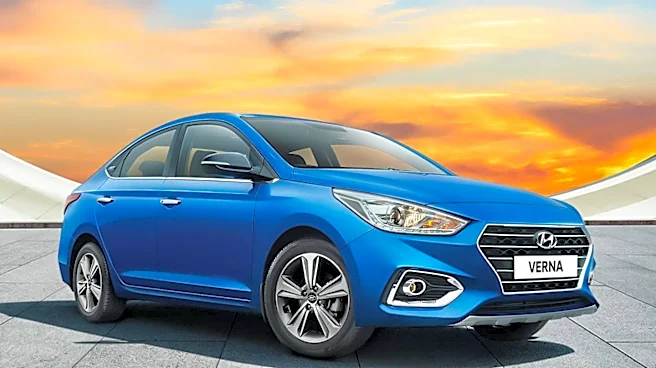
Hyundai Motor experienced a significant downturn in its August global sales, which plunged 14.2% from the previous year to 288,574 vehicles, marking its weakest August performance in over four years. This decline is primarily attributed to a prolonged
labor dispute that halted assembly lines across South Korea. Domestic registrations for Hyundai cratered by 41.1% to 34,333 units, an 11-year low. In contrast, its affiliate Kia posted a 5% global gain, selling 266,675 vehicles, driven by a 7.4% increase in overseas deliveries. In the United States, Hyundai's sales slipped 1.9% to 94,612 vehicles, while Kia saw a 0.9% increase to a record 83,793 units for the month. The labor dispute at Hyundai, involving wage negotiations and a push to extend the retirement age, resulted in 60 hours of strikes and 120 hours of production disruptions this year, including 30 hours in August alone. The union has since voted to accept a tentative wage agreement.
Why It's Important?
This divergence in sales performance between Hyundai and Kia, two brands that typically operate in close alignment, highlights the significant impact of labor disputes on automotive production and sales. For Hyundai, the strike-induced production halts have led to substantial financial losses and a loss of market momentum, particularly in its domestic market. For Kia, the ability to maintain and even increase sales, especially in the U.S. and Europe, demonstrates the resilience of its brand and its strategic focus on electric and hybrid vehicles. The report also points to a broader industry trend of reducing sales incentives to protect margins, a strategy both Hyundai and Kia have adopted. This disciplined approach to incentives, even amidst sales fluctuations, indicates a shift towards prioritizing profitability over aggressive market share expansion. The U.S. market's overall slight contraction in combined Hyundai-Kia sales also suggests a cautious consumer environment.
What's Next?
With the labor dispute formally resolved, Hyundai plans to accelerate the output of its refreshed lineup to regain lost momentum through the end of the year. This will involve ramping up production to compensate for the estimated 55,000 vehicles lost due to the strike. Kia is expected to continue leveraging its strengthened electric and hybrid vehicle lineup, particularly in North America and Europe, to sustain its growth trajectory. Both companies will likely maintain their strategy of disciplined sales incentives to protect profit margins. The performance of their electric and hybrid models will be crucial in navigating the evolving automotive market. Analysts will closely watch Hyundai's recovery efforts and Kia's continued growth to assess the long-term impact of the August sales divergence and the effectiveness of their respective market strategies.
Beyond the Headlines
The contrasting fortunes of Hyundai and Kia in August underscore the intricate interplay of labor relations, global supply chains, and market strategy in the automotive industry. Beyond the immediate sales figures, the incident at Hyundai highlights the vulnerability of complex manufacturing operations to labor unrest, even in highly automated industries. The strategic decision by both companies to reduce sales incentives, despite market pressures, reflects a broader industry shift towards sustainable profitability rather than volume at all costs. This could lead to a more stable pricing environment for consumers but also potentially fewer aggressive deals. Furthermore, Kia's success with its EV and hybrid lineup points to the accelerating transition towards electrification in the automotive sector, suggesting that manufacturers with a strong and diverse electrified portfolio are better positioned for future growth and resilience against market disruptions.