



What's Happening?
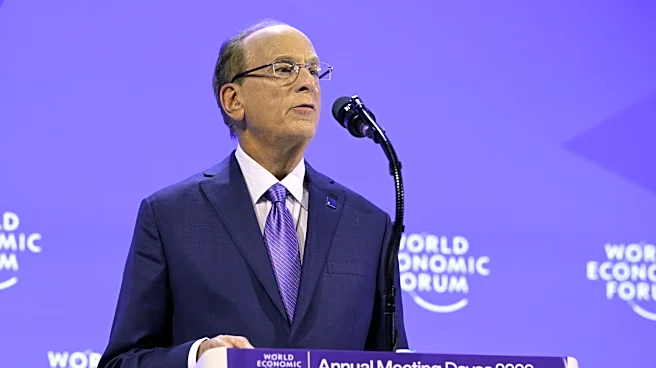
Larry Fink, Chairman and CEO of BlackRock, the world's largest asset manager, has predicted that the global economy is on the cusp of one of the largest investment cycles in recent history. Speaking via videoconference at the XXV CEDE Congress in Barcelona,
Fink identified infrastructure, energy, artificial intelligence, and the recovery of industrial capacities as key areas for capital deployment in the coming years. He emphasized that geopolitical shifts are compelling countries and companies to prioritize energy supply, technological autonomy, and production capabilities, leading to a reordering of international trade and investment flows. BlackRock, which manages $15.5 trillion in assets, recorded $205 billion in net capital inflows in the third quarter alone. Fink noted that Spain is particularly well-positioned to benefit from this new investment cycle due to its economic dynamism and capabilities in energy, technology, and infrastructure. BlackRock currently manages over 100 billion euros invested in Spain on behalf of its global clients.
Why It's Important?
This forecast from Larry Fink, a leading figure in global finance, signals a significant shift in investment priorities that could impact U.S. and international markets. The emphasis on resilience over mere efficiency and cost in supply chains suggests a move towards more localized or diversified production, potentially affecting global trade dynamics and U.S. companies reliant on international supply networks. The anticipated surge in investment in infrastructure, energy, and AI could drive innovation and economic growth, but also intensify competition for resources and talent. For U.S. investors, Fink's comments highlight potential opportunities in sectors poised for growth, while also underscoring the need for robust capital markets to channel private sector funding into these critical areas. The call for strengthening capital markets to facilitate access to financing at lower costs is particularly relevant for U.S. policy discussions around economic competitiveness and growth.
What's Next?
The predicted investment cycle is expected to necessitate an unprecedented mobilization of resources, with the private sector playing a leading role, as public funding alone will be insufficient. Fink's remarks suggest that companies and governments will increasingly focus on securing energy supplies, enhancing technological independence, and rebuilding industrial capacities. This could lead to increased cross-border investments in these strategic sectors. The ongoing deployment of artificial intelligence is also anticipated to create new job opportunities, even in traditional sectors, such as for electricians, technicians, and construction workers needed to build the necessary infrastructure. For Europe, Fink advocated for further integration of capital markets, cheaper energy, and leveraging European savings to finance productive activities, indicating potential policy shifts and investment opportunities within the continent.
Beyond the Headlines
Fink's vision extends beyond immediate economic gains, touching upon a fundamental transformation of the global economy driven by geopolitical realignments and technological advancements. The shift towards prioritizing resilience and autonomy over pure efficiency could lead to a more fragmented global economy, potentially impacting the long-standing principles of globalization. The significant role envisioned for artificial intelligence suggests a profound societal and economic restructuring, where technological progress not only creates new industries but also redefines labor markets and skill requirements across various sectors. This perspective implies a long-term re-evaluation of economic models, emphasizing strategic independence and technological leadership, which could have lasting implications for international relations and global power dynamics.