








What's Happening?
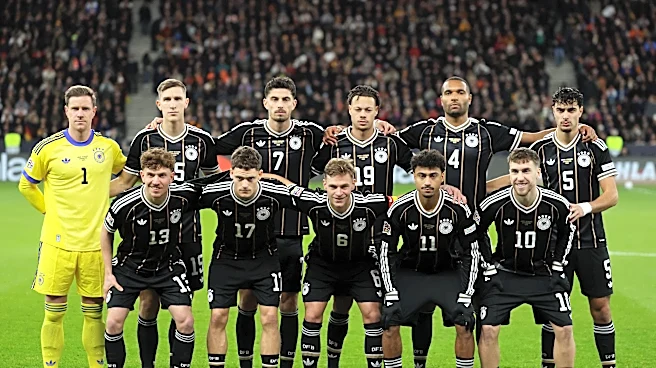
Arsenal players Kai Havertz and Jurrien Timber have successfully advanced to the quarter-finals of the Nations League with their respective national teams. Kai Havertz played 65 minutes for Germany in their decisive 5-0 victory over the Netherlands, a result
that secured Germany's spot in the last eight. Jurrien Timber started for the Netherlands and played 72 minutes in the same match. Both Germany and the Netherlands qualified from their group at the expense of Greece, despite all three nations finishing on 11 points. Germany topped the group due to a superior goal difference, while the Netherlands also progressed. Christos Tzolis, another Arsenal winger, played 88 minutes for Greece in their 1-0 victory but his team missed out on qualification due to goal difference. James Scanlon also contributed an assist for Gibraltar in their 1-1 draw against Malta in League D.
Why It's Important?
The progression of key Arsenal players like Kai Havertz and Jurrien Timber in international competitions like the Nations League is significant for both the players and the club. For the players, it provides valuable experience in high-stakes matches against top international talent, which can enhance their form and confidence upon returning to their club duties. For Arsenal, having players perform well on the international stage can boost their morale and contribute to a winning mentality within the squad. However, it also highlights the challenge of managing player fatigue and potential injury risks due to demanding international schedules. The success of these players in such tournaments can also elevate their individual profiles and the club's reputation on a global scale.
What's Next?
Germany, with Kai Havertz, will now face one of Spain, Belgium, or the winner of the Denmark vs. Norway match in the Nations League quarter-finals. The Netherlands, with Jurrien Timber, will compete against either France, England, or Portugal in their quarter-final tie. The draw for these matches is scheduled to take place on Friday, November 20. These upcoming fixtures will present further opportunities for Havertz and Timber to gain competitive international experience. For Arsenal, the focus will be on monitoring their players' fitness and ensuring a smooth transition back to club football following their international commitments, especially as the domestic and European club seasons intensify.
Beyond the Headlines
The Nations League, while an international competition, has broader implications for club football. The high-level competition allows players to maintain peak physical condition and tactical sharpness during international breaks, which can be beneficial for their club performances. However, the increased workload also poses a risk of injuries, which clubs must carefully manage. The performance of players like Havertz and Timber in such tournaments can also influence their market value and desirability. Furthermore, the success of national teams often reflects the quality of players developed by top clubs, indirectly showcasing Arsenal's talent development and recruitment strategies. The experience gained in these high-pressure international games can also foster leadership qualities and resilience that benefit the club environment.