






What's Happening?
The Mapuche people of southern Chile and Argentina maintain a tradition where spiritual authority is not confined to a male/female binary, exemplified by the Machi, their central spiritual and religious authorities. Machi are recognized for a distinct
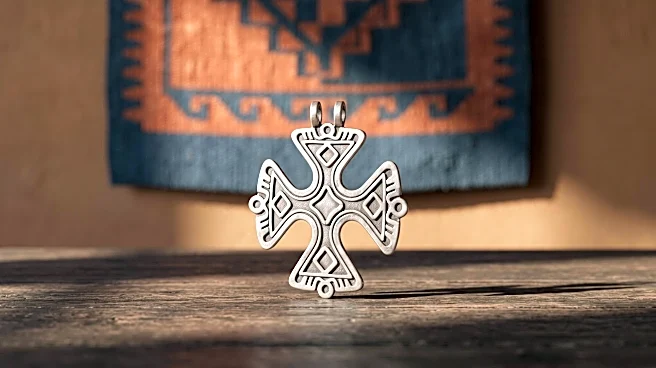
gender defined by spiritual calling rather than assigned birth sex. This tradition is rooted in the Mapuche worldview of dualism, where concepts like sky and earth, good and evil, and masculine and feminine are held in constant balance. The Machi's role is to maintain this balance for the community, and their gender identity reflects this principle, being conferred by the role itself. Anthropologist Ana Mariella Bacigalupo and Mapuche linguists María Catrileo and Gloria Quidel have extensively documented this tradition, with contemporary Machi like Jorge Quilaqueo continuing the practice. The Machi also wear a 'trapelacucha,' a silver pendant symbolizing duality and offering protection against evil spirits.
Why It's Important?
The Mapuche Machi tradition offers a significant example of how spiritual authority and gender fluidity have coexisted outside a strict binary in indigenous cultures, predating Western mainstream discussions on the topic. This tradition challenges the notion of a universal gender binary and provides a concrete case study of how a living culture defines spiritual calling on its own terms. For broader societal understanding, it underscores the diversity of gender identities and roles across different cultures and historical periods. The Machi's continued practice within Chile's largest indigenous community demonstrates the resilience and ongoing relevance of indigenous spiritual practices. It also highlights the importance of indigenous voices in documenting and interpreting their own cultural concepts, rather than relying solely on external frameworks.
What's Next?
The Mapuche Machi tradition continues as an active, living spiritual practice within one of South America's largest and most politically visible indigenous populations. Ongoing scholarly work by anthropologists and linguists, including Mapuche scholars, will likely continue to document and interpret the nuances of Machi gender and spiritual practice. The tradition's intersection with modern Mapuche politics, as seen in cases like Machi Celestino Córdova, suggests its continued relevance in broader social and political discourse. Future developments may involve further recognition and protection of indigenous spiritual practices and gender identities within national and international contexts, as well as continued efforts to share this rich cultural heritage with a wider audience.
Beyond the Headlines
The Mapuche Machi tradition delves into profound ethical and cultural dimensions by demonstrating that gender identity can be intrinsically linked to spiritual roles and community service, rather than solely biological factors. This perspective offers a powerful counter-narrative to Western-centric views of gender, emphasizing fluidity and the sacredness of diverse identities. The use of the 'trapelacucha' as a protective and symbolic artifact further illustrates the deep connection between material culture, spiritual belief, and identity. The tradition's resilience in the face of historical and contemporary pressures also speaks to the enduring strength of indigenous knowledge systems and their capacity to offer alternative models for understanding human experience and societal organization. It prompts a re-evaluation of how societies define and categorize gender, highlighting the rich tapestry of human cultural expression.