








What's Happening?
Simplifyber, a materials innovation start-up based in Raleigh, North Carolina, is revolutionizing the textile and apparel manufacturing industry with its new single-step process. Founded by Phil Cohen and Maria Intscher-Owrang, the company has developed
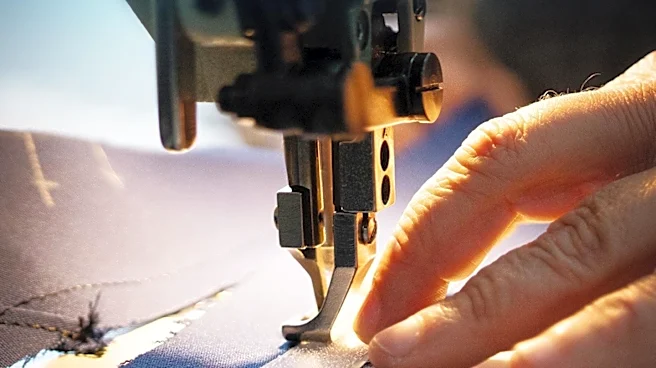
a liquid-based, FSC-certified cellulose material that can be injected into molds to create soft goods. This innovation allows manufacturers to bypass traditional multistage processes such as spinning, weaving, cutting, and sewing, potentially eliminating up to 60% of production steps. Simplifyber's platform is versatile, working with a range of natural and regenerated fibers, including wood pulp, recycled paper, and hemp. The company has already partnered with brands like Ganni for footwear and Kia for automotive materials, focusing on reducing complexity and waste in manufacturing.
Why It's Important?
Simplifyber's innovation is significant as it addresses the textile industry's long-standing issues of waste and inefficiency. By simplifying the manufacturing process, the company not only reduces material waste but also lowers the carbon footprint associated with textile production. This development is crucial for the $2 trillion textile industry, which is under increasing pressure to adopt sustainable practices. The ability to incorporate recycled materials and reduce labor-intensive steps could lead to more localized manufacturing, reducing dependency on global supply chains. This shift could enhance sustainability and resilience in the industry, offering economic and environmental benefits.
What's Next?
Simplifyber is entering a new phase focused on scaling production and forming partnerships to bring its technology to market. The company aims to establish a new manufacturing ecosystem, making its technology accessible globally. As Simplifyber's materials become more widely adopted, it could lead to significant changes in how products are designed and manufactured, encouraging more brands to explore sustainable practices. The success of this technology could inspire further innovations in other industries, promoting a broader shift towards circular economies.
Beyond the Headlines
The implications of Simplifyber's technology extend beyond immediate environmental benefits. By enabling the use of locally available materials and reducing the need for complex supply chains, the technology could foster economic growth in regions previously sidelined in global manufacturing. Additionally, the shift towards bio-based materials aligns with consumer preferences for products that offer a connection to the natural world, potentially driving demand for more sustainable goods. This innovation could also influence regulatory policies, encouraging governments to support sustainable manufacturing practices.