



What's Happening?
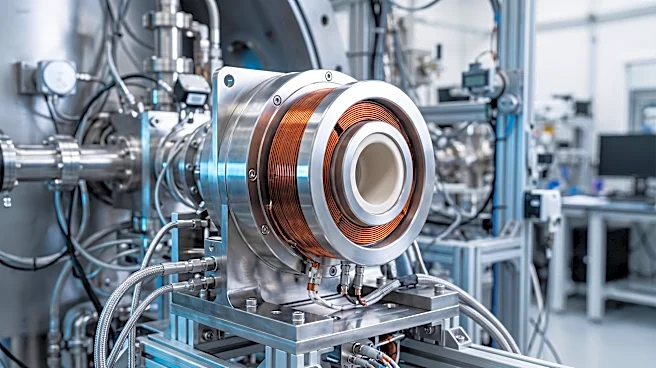
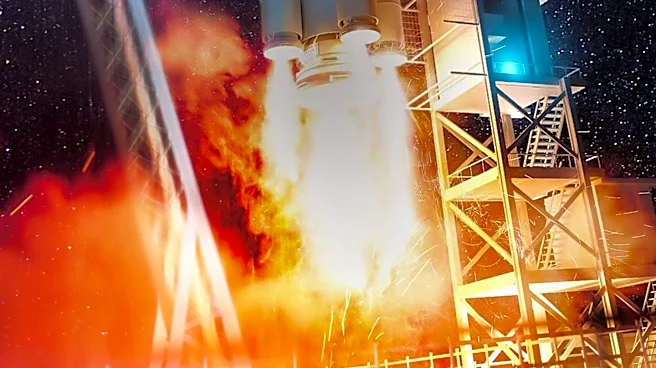
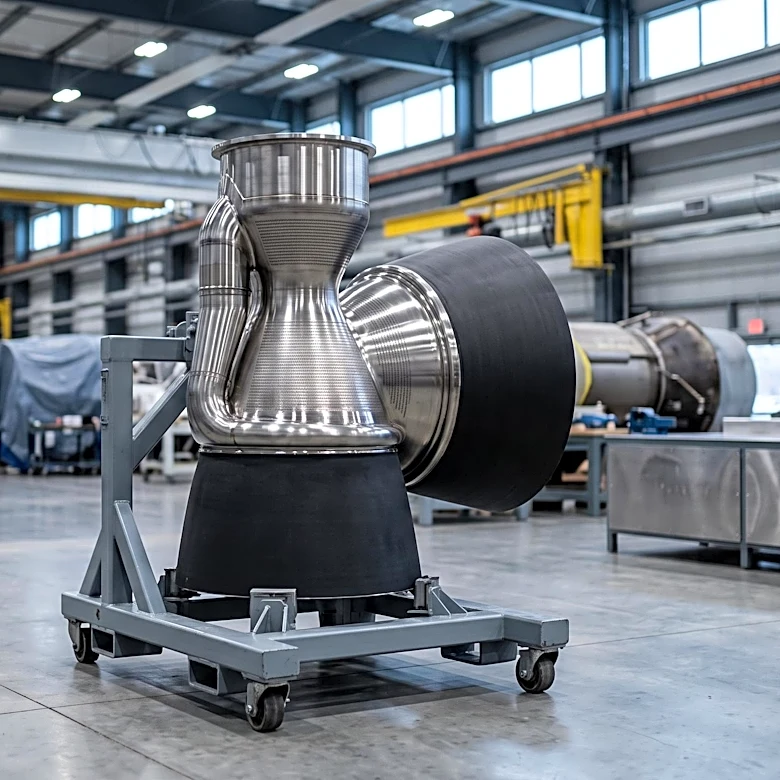
Stoke Space, a privately held U.S. company based in Kent, WA, has announced the completion of the development of its Zenith methane engine for the first stage of its new Nova rocket. Seven of these engines will be integrated into the reusable first stage,
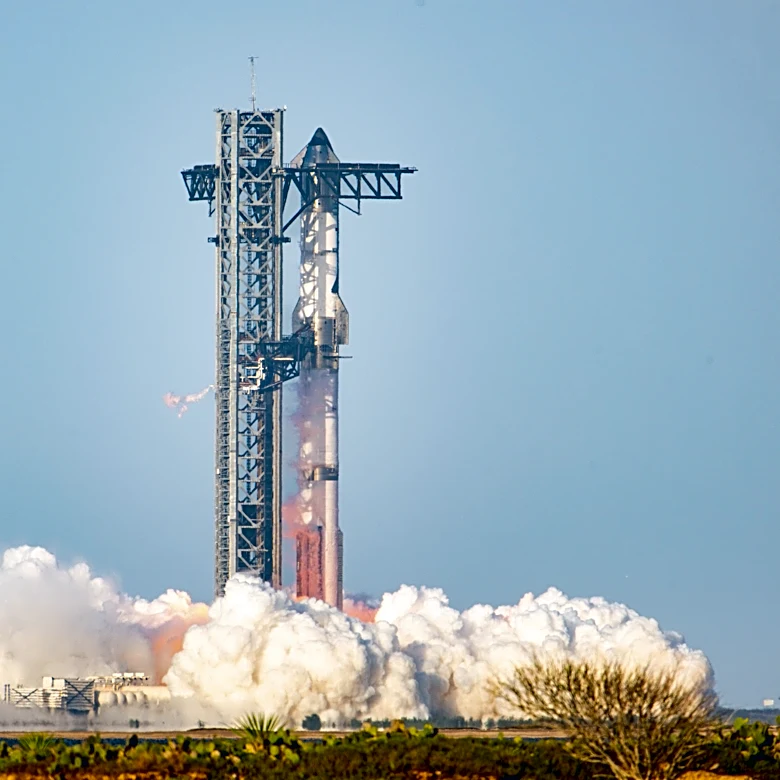
providing a combined thrust of 700,000 pounds. The company is currently conducting acceptance tests for the flight-ready engines, which are being sent weekly to Cape Canaveral for integration. Stoke Space's Nova rocket is designed to feature fully reusable first and second stages, a significant advancement in space launch technology. The second stage is undergoing separate testing, including structural integrity checks under cryogenic temperatures and fire tests of its engine system at Stoke Space's test complex in rural Washington state. The first launch of the Nova rocket is anticipated in 2027.
Why It's Important?
This development by Stoke Space marks a crucial step in the evolution of reusable rocket technology, potentially lowering the cost and increasing the frequency of space launches. The ability to fully reuse both stages of a rocket, including the second stage which typically burns up or is discarded, could revolutionize the space industry. This innovation could make space access more affordable for commercial, scientific, and defense applications, fostering greater competition and accelerating advancements in satellite deployment, space exploration, and in-orbit services. For the U.S. space sector, this could solidify its leadership in advanced rocketry and attract further investment and talent, creating jobs and driving economic growth in the defense and space manufacturing sectors, particularly in regions like Kent, WA.
What's Next?
The immediate next steps for Stoke Space involve the continued integration of the Zenith engines with the Nova rocket's first stage at Cape Canaveral. Concurrently, the second stage will proceed with its rigorous testing phase, including cryogenic and fire tests, to ensure its structural integrity and engine system reliability. The company aims for the first launch of the Nova rocket in 2027. If successful, Stoke Space will then focus on demonstrating the full reusability of both stages, which will involve complex atmospheric re-entry and landing procedures. This will likely be followed by a series of test flights to validate the system's reliability and operational efficiency before commercial services can commence. The company is also actively hiring for roles like Vehicle Software Engineer, indicating ongoing development and expansion.
Beyond the Headlines
The pursuit of fully reusable rocket stages by companies like Stoke Space represents a paradigm shift in space travel, moving beyond the partial reusability currently employed by some industry leaders. This technological leap could significantly reduce the environmental impact of space launches by minimizing orbital debris and the consumption of single-use components. Ethically, it raises questions about equitable access to space, as lower launch costs could democratize space utilization, potentially leading to a more diverse range of actors in space. Long-term, this could foster a more sustainable space economy, enabling more ambitious missions, from extensive satellite constellations to deeper space exploration, and potentially paving the way for future space colonization efforts by making regular, affordable access to orbit a reality.