









What's Happening?
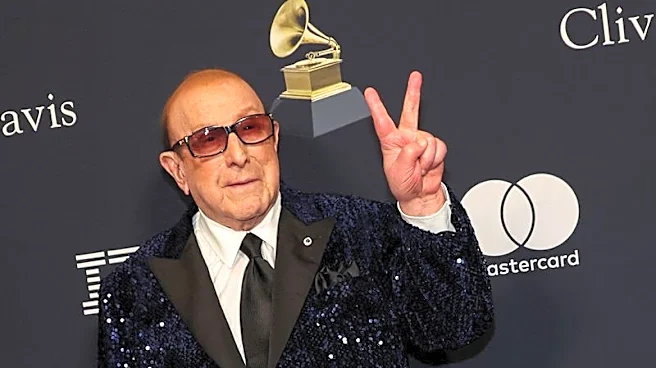
Clive Davis, a legendary figure in the music industry, passed away at the age of 94. Known for his 'golden ears,' Davis played a crucial role in shaping the careers of numerous iconic artists. Starting his career as an in-house lawyer for Columbia Records
in the 1960s, Davis quickly rose to prominence by signing and developing artists such as Janis Joplin, Whitney Houston, and Jennifer Hudson. His influence extended to veteran acts like Santana and Aretha Franklin, helping them achieve renewed success. One of his most notable contributions was his insistence on the a cappella opening of Whitney Houston's 'I Will Always Love You,' which became a massive hit. Davis's career was marked by his intuitive approach to music, relying on his instincts rather than formal musical training.
Why It's Important?
Clive Davis's impact on the music industry is profound, having shaped the careers of some of the most successful artists in history. His ability to identify and nurture talent has left a lasting legacy, influencing the direction of popular music for decades. Davis's work not only brought commercial success to the artists he signed but also enriched the cultural landscape by introducing groundbreaking music to the public. His approach to artist development and his knack for hit-making have set a standard in the industry, demonstrating the importance of visionary leadership in the arts. The loss of Davis marks the end of an era, but his contributions continue to resonate, inspiring future generations of music executives and artists.
What's Next?
With Clive Davis's passing, the music industry reflects on his legacy and the void left by his absence. Industry leaders and artists may seek to honor his contributions through tributes and retrospectives, celebrating his achievements and the artists he helped elevate. The principles and practices he championed, such as artist development and creative risk-taking, may continue to influence industry strategies. As the music landscape evolves, Davis's legacy serves as a reminder of the power of intuition and passion in shaping cultural phenomena. Future music executives may look to his career as a blueprint for success, striving to emulate his ability to connect with audiences and foster artistic innovation.
Beyond the Headlines
Clive Davis's career highlights the intersection of business acumen and artistic vision in the music industry. His success underscores the importance of understanding both the commercial and creative aspects of music production. Davis's approach to artist development, characterized by a deep respect for artistic integrity and a willingness to take risks, challenges the often transactional nature of the industry. His legacy prompts a reevaluation of how music executives can balance profitability with artistic expression, potentially influencing future industry practices. Additionally, Davis's story illustrates the transformative power of mentorship and the lasting impact a single individual can have on an entire industry.