







What's Happening?
Nordson Corporation, based in Westlake, Ohio, has announced the acquisition of Contrinex, a global leader in high-performance sensors for factory automation. This strategic move aims to enhance Nordson's test and inspection portfolio by integrating Contrinex's
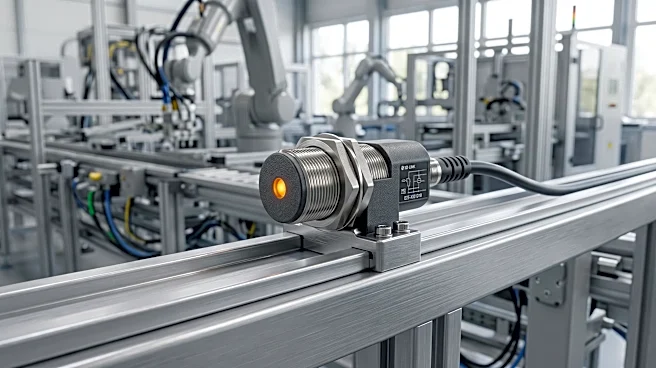
advanced sensor technology, particularly in harsh-environment and miniature precision-positioning applications. Contrinex, headquartered in Corminboeuf, Switzerland, generates approximately $50 million in annual revenue and specializes in inductive position sensors, photoelectric position sensors, and smart measurement sensors with integrated logic. The acquisition will see Contrinex integrated into Nordson’s Advanced Technology Solutions segment, bringing nearly 500 employees into the Nordson family. According to Srini Subramanian, executive vice president of Nordson Advanced Technology Solutions, this acquisition aligns with Nordson's Ascend Strategy, focusing on differentiated technologies for top-tier growth and returns.
Why It's Important?
This acquisition is significant for Nordson Corporation as it strengthens its position in the rapidly growing industrial automation market. By incorporating Contrinex's specialized sensor technology, Nordson can offer more comprehensive solutions for factory automation, machine control, and smart manufacturing, which are critical trends driving industrial growth. For the U.S. manufacturing sector, this means access to more advanced and precise sensing technologies, potentially leading to increased efficiency, improved quality control, and greater automation capabilities in factories. The deal also expands Nordson's global customer base and market exposure to attractive industrial automation trends. Companies in the U.S. that rely on industrial sensors and automation will benefit from Nordson's expanded portfolio, potentially reducing operational costs and enhancing productivity. This move reflects a broader industry trend where companies are acquiring specialized technology firms to bolster their offerings and maintain a competitive edge in an evolving industrial landscape.
What's Next?
Nordson plans to apply its NBS Next growth framework to Contrinex, investing in its profitable growth opportunities and scaling its product offerings across Nordson's global customer base. This integration is expected to enhance Nordson's ability to serve diverse end markets, including consumer non-durable, medical, electronics, and industrial sectors. The acquisition will likely lead to the development of new, integrated solutions that combine Nordson's existing test and inspection capabilities with Contrinex's sensor expertise. Competitors in the industrial sensing and automation space may respond by seeking their own strategic acquisitions or by accelerating their internal research and development efforts to keep pace with Nordson's expanded capabilities. Over time, this could lead to further consolidation in the industrial automation market as companies strive to offer more complete and advanced technological solutions to their clients.
Beyond the Headlines
The acquisition of Contrinex by Nordson highlights a deeper strategic imperative for industrial technology companies: the need to continuously innovate and integrate specialized capabilities to meet the demands of Industry 4.0. The focus on harsh-environment and miniature precision-positioning sensors points to the increasing complexity and miniaturization of industrial processes, where traditional sensors may no longer suffice. This trend also underscores the importance of data collection and analysis in modern manufacturing, as advanced sensors provide the granular data necessary for predictive maintenance, process optimization, and real-time decision-making. Furthermore, the global nature of Contrinex's operations and Nordson's existing international presence suggest a continued drive towards globalized supply chains and integrated technological solutions, where companies seek to leverage expertise from various regions to serve a worldwide market. This strategic move could set a precedent for other industrial players looking to enhance their automation and sensing portfolios.