




What's Happening?
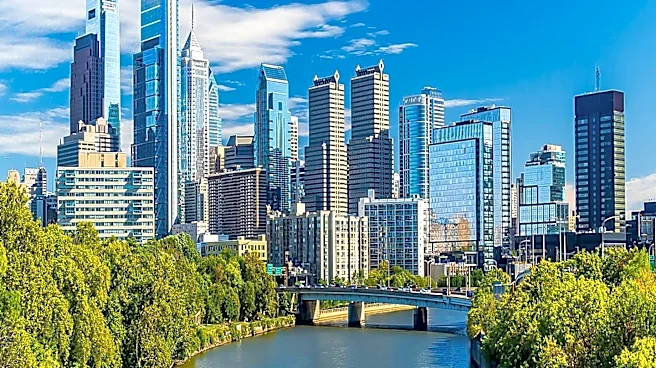
Philadelphia is planning to launch 'One Philly Mortgage,' a city-run program aimed at making homeownership more accessible for first-time buyers. This initiative seeks to be the first of its kind in a major U.S. city, offering mortgages with a low 3%
down payment and accepting credit scores as low as 620. A key feature of the program is the elimination of private mortgage insurance (PMI), which is typically required for conventional loans with less than a 20% down payment. The city has allocated $25 million for these low-interest mortgage loans. The program is designed for first-time homebuyers earning up to 120% of the area's median income, with a target launch later this year. The 'One Philly Mortgage' is part of Mayor Cherelle Parker's broader H.O.M.E. initiative, which aims to build or preserve 30,000 homes during her term.
Why It's Important?
This proposed mortgage program is significant as it directly addresses major barriers to homeownership, particularly for low- and moderate-income individuals in Philadelphia. High home prices and elevated mortgage rates have made it challenging for many to save for a substantial down payment or meet stringent credit requirements. By offering a 3% down payment option and a lower credit score threshold, the city aims to open up homeownership to a wider demographic. The elimination of PMI is a crucial benefit, as PMI can add hundreds of dollars to monthly mortgage payments, making homeownership more expensive. This program could serve as a model for other U.S. cities grappling with housing affordability crises, demonstrating a municipal approach to directly intervene in the mortgage market to support residents.
What's Next?
The City of Philadelphia is still in the process of finalizing the guidelines and application process for the 'One Philly Mortgage' program, with a launch targeted for later this year. While the H.O.M.E. initiative, under which this program falls, has been slow to spend its allocated funding thus far, city officials anticipate an acceleration in spending through the rest of the fiscal year. The success and impact of this program will depend on its final terms, including interest rates and other borrowing costs, which have yet to be announced. Potential homebuyers will need to await these details to fully understand the savings and benefits compared to conventional mortgage options. The city's ability to effectively implement and manage this program will be closely watched as it could influence similar initiatives in other urban centers.
Beyond the Headlines
The 'One Philly Mortgage' program represents a bold step by a municipal government into a domain traditionally dominated by federal agencies and private lenders. This initiative could spark a broader conversation about the role of local governments in addressing housing affordability and wealth inequality. By directly offering mortgages, Philadelphia is taking on financial risk and administrative responsibilities typically handled at higher levels of government or by private institutions. This could lead to debates about the sustainability of such programs, their potential impact on local housing markets, and the extent to which cities should engage in direct financial services. Furthermore, if successful, it could inspire a wave of similar municipal mortgage programs across the country, fundamentally altering the landscape of first-time homebuyer assistance and local economic development strategies.