








What's Happening?
Oil prices have increased following renewed military strikes between the U.S. and Iran, which have raised concerns over crude supplies from the Middle East. West Texas Intermediate futures rose by 1.7% to $70.38 per barrel, while Brent crude futures gained
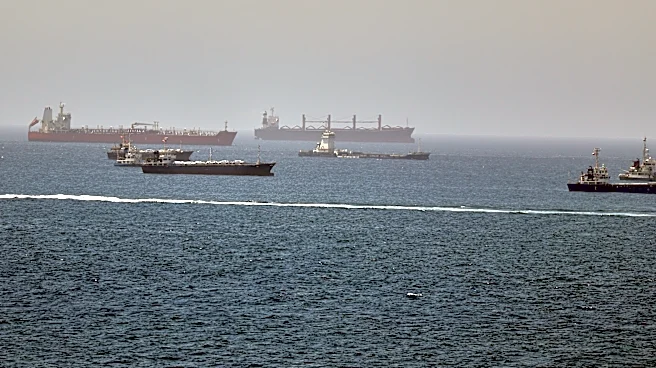
1.1% to $72.80. The escalation in hostilities, including U.S. strikes on Iranian targets in response to attacks on commercial shipping in the Strait of Hormuz, has disrupted negotiations aimed at ending the conflict. Despite the tensions, both sides have agreed to pause hostilities and allow commercial vessels to transit the strait freely, as technical talks continue.
Why It's Important?
The rise in oil prices highlights the sensitivity of global energy markets to geopolitical tensions in the Middle East. The Strait of Hormuz is a critical chokepoint for oil transportation, and any disruption can have significant implications for global supply and prices. The ongoing conflict between the U.S. and Iran adds to the uncertainty, affecting market stability and investor confidence. The situation underscores the importance of diplomatic efforts to resolve the conflict and ensure the free flow of oil, which is vital for the global economy.
What's Next?
Technical talks between the U.S. and Iran are expected to continue, with both sides agreeing to stand down for now. However, the potential for renewed hostilities remains if negotiations falter. The international community, particularly oil-importing countries, will be closely monitoring the situation, as any escalation could lead to further disruptions in oil supply and price volatility. The U.S. and Iran's ability to manage their relationship through diplomacy will be crucial in maintaining market stability.