




What's Happening?
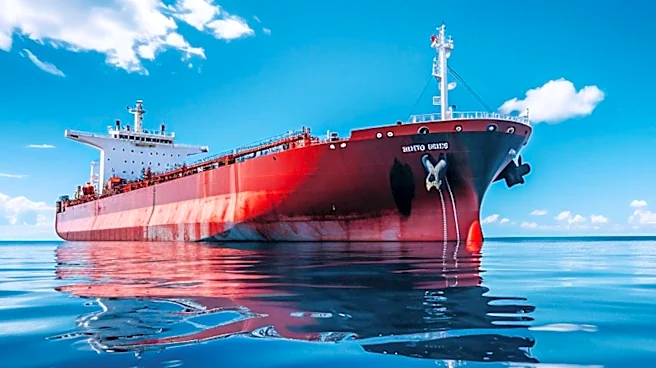
Gold prices have increased by 0.75% as of Tuesday, driven by falling oil prices and US Treasury yields. The potential reopening of the Strait of Hormuz, a critical maritime route, has contributed to easing inflation expectations, further boosting gold's
appeal. The US Dollar Index has slightly decreased amid these developments. Talks between Iran and Oman regarding the Strait of Hormuz are ongoing, with the possibility of Europe being allowed to clear mines in the area. Additionally, US economic indicators such as the Job Openings and Labor Turnover Survey (JOLTS) and trade deficit figures have shown mixed results, with the labor market appearing balanced. The Federal Reserve's future rate hikes remain a topic of speculation, with a significant chance of a rate increase in upcoming meetings.
Why It's Important?
The rise in gold prices reflects broader economic and geopolitical dynamics, particularly the easing of tensions in the Middle East, which could stabilize oil prices and reduce inflationary pressures. This situation impacts investors and markets by potentially altering the Federal Reserve's monetary policy trajectory. A stable or decreasing inflation rate could lead to a more cautious approach to interest rate hikes, affecting borrowing costs and investment strategies. The developments in the Strait of Hormuz are crucial for global oil supply, and any resolution could have significant implications for energy markets and related sectors.
What's Next?
Attention will shift to upcoming US economic data releases, including the ADP Employment Change and Nonfarm Payrolls, which will provide further insights into the labor market's health. These figures will influence the Federal Reserve's policy decisions, with markets closely watching for any signs of a shift in the central bank's stance. Additionally, the progress of negotiations regarding the Strait of Hormuz will be monitored, as any agreement could further impact oil prices and inflation expectations.