


What's Happening?
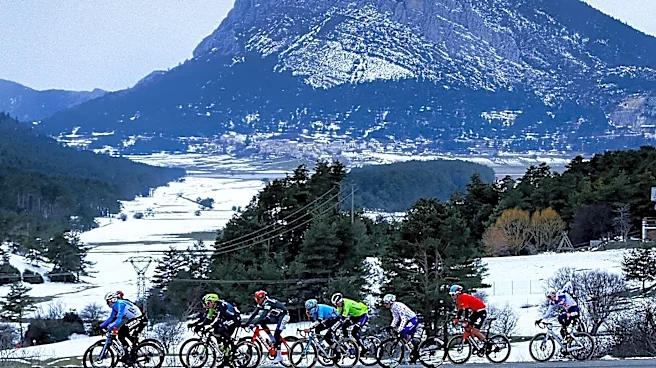
The Vuelta a España 2026 features a challenging Stage 4 in Andorra, designed to test riders with its compact yet demanding mountain route. The stage includes four classified climbs within a 104.8 km distance, with three being first-category ascents. The route begins
and ends in Andorra la Vella, incorporating climbs such as Port d'Envalira and Collada de Beixalis. This stage is strategically significant due to its short length and high climbing density, which encourages aggressive racing and tactical maneuvers. The final climb, La Comella, is a third-category ascent that tops out just 4.8 km from the finish, adding a tactical element to the race's conclusion.
Why It's Important?
This stage is crucial for shaping the general classification early in the Vuelta. The compact nature of the route means that riders and teams must be tactically astute, as any hesitation or miscalculation can lead to significant time losses. The stage's design encourages breakaways and aggressive tactics, potentially leading to early shake-ups in the overall standings. For teams and riders, this stage offers an opportunity to gain an advantage or recover lost time, making it a pivotal point in the race. The outcome of this stage could influence team strategies and rider morale for the remainder of the Vuelta.
What's Next?
Following this stage, teams will need to reassess their strategies based on the outcomes in Andorra. Riders who perform well may gain a psychological edge, while those who struggle will need to regroup quickly. The Vuelta will continue with a mix of mountain and flat stages, each presenting unique challenges. Teams will likely focus on recovery and tactical planning to maintain or improve their positions in the general classification. The Andorra stage sets the tone for the upcoming mountain challenges, emphasizing the importance of endurance and strategic racing in the Vuelta.