




What's Happening?
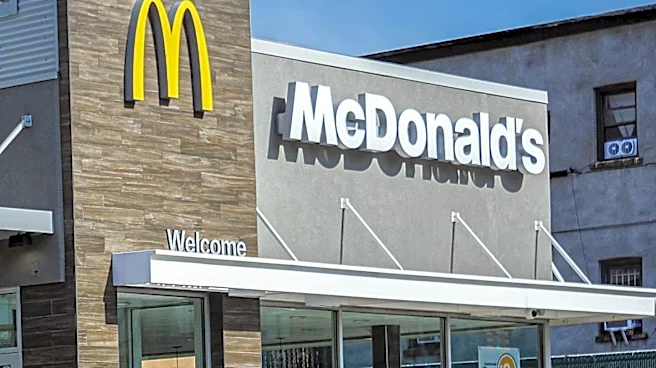
McDonald's Corporation is implementing new strategies to boost U.S. sales after a disappointing third quarter in 2026, which saw a 0.2% decline in comparable sales. Chairman and CEO Chris Kempczinski noted that while September and October showed encouraging
baseline traffic trends, more work is needed to improve U.S. performance. The company has initiated an eight-week test of two entry-level menu approaches in approximately 1,900 U.S. restaurants. These tests include mix-and-match bundles and fixed-combination bundles. Additionally, around 4,000 franchisees have independently launched similar meal bundles, bringing the total participation in these value offerings to over 40% of the U.S. system. McDonald's is evaluating these tests based on incremental sales, customer take rates, operational feasibility, and franchisee economics. The company also partially restored regional and national digital offers, such as a $2 breakfast sandwich and free fries with a $1 minimum purchase, which reportedly exceeded expectations for incremental guest counts and sales. Loyalty members now constitute nearly 30% of the U.S. customer base.
Why It's Important?
This strategic shift by McDonald's highlights the increasing importance of value offerings in the U.S. fast-food market, particularly for lower-income consumers. The company's focus on entry-level bundles indicates an effort to attract and retain a broader customer base amidst economic pressures. A successful implementation of these value initiatives could significantly impact McDonald's market share and revenue in the competitive quick-service restaurant sector. The independent adoption of similar bundles by a substantial number of franchisees underscores a widespread recognition within the system of the need for more aggressive value propositions. This move could also influence competitors to re-evaluate their own pricing and promotional strategies, potentially leading to a broader trend of value-focused menus across the industry. The emphasis on digital offers and loyalty programs also reflects a broader industry trend towards leveraging technology to drive customer engagement and sales, indicating that digital transformation remains a key component of growth strategies.
What's Next?
McDonald's will continue to assess the results of its eight-week value meal bundle tests, with a planned national launch of new low-priced bundles in early 2027. The company will analyze data on incremental sales, customer adoption rates, operational efficiency, and franchisee profitability to determine the most effective approach. Chief Financial Officer Ian Borden has cautioned that fourth-quarter U.S. comparable sales are not expected to improve from the third-quarter level, suggesting that the full impact of these new strategies may not be immediately visible. Beyond value meals, McDonald's is also preparing hand-breaded chicken pilots in the U.S. and Ireland, with advertised sales tests planned for about 100 U.S. restaurants and a national rollout in Ireland in early 2027. The company also aims to expand its specialty beverage platform to over 7,000 additional European restaurants by mid-2027, targeting a 1.5 percentage point increase in beverage market share by 2030. These initiatives indicate a multi-faceted approach to driving future growth and improving performance.
Beyond the Headlines
The challenges faced by McDonald's in its U.S. market reflect broader economic trends impacting consumer spending habits, particularly among lower-income demographics. The company's pivot towards aggressive value offerings suggests a recognition that discretionary spending is tightening, and consumers are increasingly price-sensitive. This could signal a long-term shift in consumer behavior, where value becomes a more dominant factor in dining choices. The independent actions of franchisees to introduce their own bundles highlight the decentralized nature of the McDonald's system and the entrepreneurial spirit within its franchise network, which can be both an asset and a challenge for corporate strategy. Furthermore, the continued investment in digital platforms and loyalty programs underscores the evolving landscape of customer engagement, where personalized offers and seamless digital experiences are becoming critical for maintaining customer loyalty and driving repeat business. This trend suggests that the future of fast food will increasingly integrate technology with traditional value propositions.