
What's Happening?
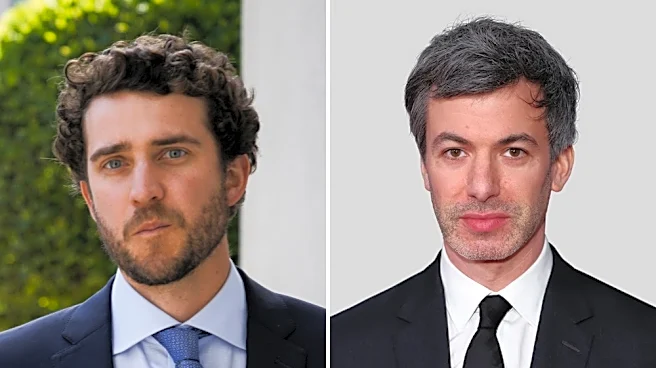
The Telluride Film Festival recently hosted a surprise premiere of the documentary 'You Can See Everything,' co-directed by Nathan Fielder and Lance Oppenheim. The film focuses on Elizabeth Holmes, the founder of Theranos, in the period leading up to
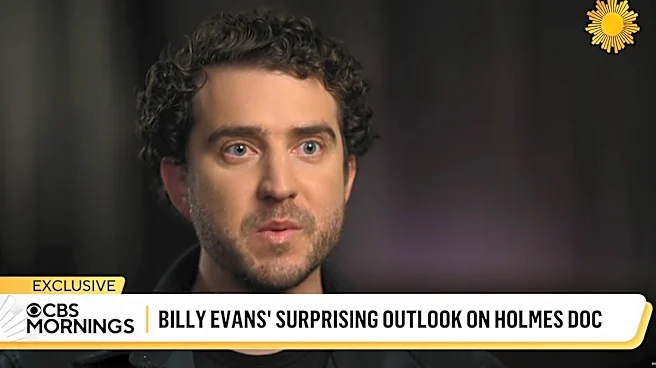
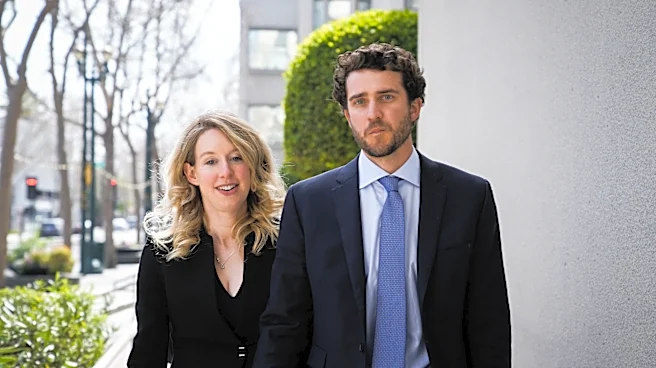
her incarceration. Instead of re-litigating the Theranos scandal, the documentary delves into Holmes's life at home with her children and partner, Billy Evans, as Fielder attempts to understand her. The film is noted for its distinctive cinematography, featuring numerous close-ups on the expressions of Holmes, Fielder, and Evans, and includes discussions about transcript alterations, aiming to explore the elusive nature of truth in a complex situation. Since its wider release, the documentary has garnered significant attention at the box office and online, sparking numerous analyses.
Why It's Important?
This documentary's premiere at a prestigious event like the Telluride Film Festival highlights a significant shift in documentary filmmaking, moving away from conventional true-crime narratives. By focusing on the personal life of a controversial figure like Elizabeth Holmes rather than just her public scandal, the film challenges audiences to engage with themes of truth, perception, and manipulation on a deeper level. Its success at the box office and online indicates a strong public appetite for nuanced, unconventional storytelling in the documentary genre. This approach could influence future documentary productions, encouraging filmmakers to explore more intimate and psychologically complex portrayals of their subjects, even those involved in high-profile legal cases. The film's exploration of Fielder's own enigmatic persona alongside Holmes's further complicates the audience's search for truth, making it a notable cultural event.
What's Next?
The success and buzz surrounding 'You Can See Everything' suggest that it will likely continue to be a subject of discussion within film communities and among the general public. Its unique narrative style and focus on the personal aspects of Elizabeth Holmes's life could lead to further critical analysis and academic study of documentary ethics and methodology. The film's performance may also encourage other festivals and distributors to seek out and promote documentaries that deviate from traditional formats, potentially fostering a new wave of innovative non-fiction storytelling. Additionally, the film's exploration of truth and perception in a 'post-truth' era could spark broader societal conversations about media literacy and how individuals interpret complex narratives.
Beyond the Headlines
The documentary 'You Can See Everything' delves into the ethical complexities of portraying individuals involved in high-profile legal cases, particularly when the subject is a 'cypher' like Elizabeth Holmes. By embedding Fielder within Holmes's home, the film raises questions about the boundaries of journalistic access and the potential for manipulation, both by the subject and the filmmaker. The focus on subtle expressions and transcript alterations underscores the power of language and visual cues in shaping public perception, highlighting how easily narratives can be constructed or deconstructed. This approach challenges viewers to critically examine their own biases and assumptions, moving beyond simple judgments to grapple with the ambiguities of human behavior and motivation. The film's impact extends beyond entertainment, serving as a commentary on the nature of truth in an increasingly mediated world.