







What's Happening?
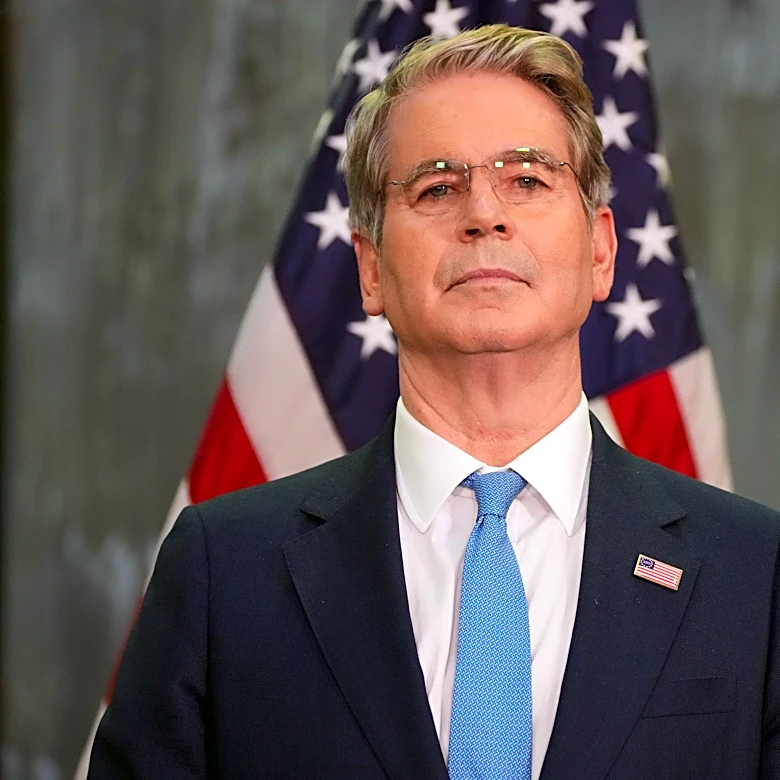
ConocoPhillips has appointed CFO Andy O'Brien as its new Chief Executive Officer, effective September 1, succeeding Ryan Lance, who will transition to executive chairman. This leadership change comes as the company aims to achieve a $7 billion free cash
flow growth target by 2029, with the Willow Alaska oil project expected to contribute approximately 75% of this growth. The Willow project, approved in 2023, has seen its cost estimate rise to as much as $9 billion due to inflation and supply chain pressures. In response to rising costs and to streamline operations, ConocoPhillips previously announced plans to lay off up to 25% of its global workforce. O'Brien's immediate focus will be on delivering the existing strategic plan, which includes managing the Willow project and continuing cost reduction programs. The announcement coincided with the company's highest quarterly net income since 2022, driven by higher crude prices.
Why It's Important?
This leadership transition at ConocoPhillips is significant for the U.S. energy sector, particularly given the company's substantial investment in the Willow Alaska oil project. The project's success is crucial for ConocoPhillips to meet its ambitious free cash flow targets, and any delays or cost overruns could impact its financial performance and investor confidence. The decision to lay off a significant portion of its global workforce underscores the industry's ongoing pressure to control costs and enhance operational efficiency in a volatile market. For the U.S., the Willow project represents a major domestic oil development, and its timely and on-budget completion could contribute to national energy security and economic activity in Alaska. The company's performance and strategic direction under O'Brien will be closely watched by investors and competitors, as it navigates complex operational challenges and market dynamics, including disruptions at Qatar LNG projects and the broader industry trend towards consolidation.
What's Next?
Andy O'Brien will officially assume the CEO role on September 1, with his immediate priority being the execution of ConocoPhillips' existing strategic plan, particularly the Willow Alaska project and ongoing cost reduction initiatives. The company faces the challenge of delivering the Willow project on time and within its revised budget by 2029, the same year as its $7 billion free cash flow target. Analysts will be monitoring the company's progress on cost discipline and project execution, especially given the tight timeline and the project's significant contribution to future cash flow. The transition also places ConocoPhillips in a position to potentially engage in further industry consolidation, a trend anticipated in the oil sector. Ryan Lance's move to executive chairman suggests a desire for continuity in leadership and strategy, but O'Brien will need to establish his own leadership while adhering to the established goals. The company's ability to manage external factors, such as geopolitical events affecting crude prices and LNG projects, will also be critical.
Beyond the Headlines
The leadership change at ConocoPhillips highlights broader themes within the U.S. energy industry, including the delicate balance between ambitious capital projects and stringent cost control. The Willow project, while a significant economic endeavor, also carries environmental implications and has faced scrutiny from various stakeholders. The company's decision to proceed with such a large-scale project in a remote location like Alaska underscores the long-term strategic importance of oil and gas production for major energy companies, even amidst global shifts towards renewable energy. The layoffs, while aimed at improving efficiency, reflect the human cost of corporate restructuring in response to market pressures. Furthermore, the emphasis on continuity in leadership, with the former CEO transitioning to executive chairman, suggests a strategic effort to maintain stability and investor confidence during a period of significant operational and financial targets. This approach could influence how other large corporations manage leadership transitions while pursuing long-term, high-stakes projects.