






What's Happening?
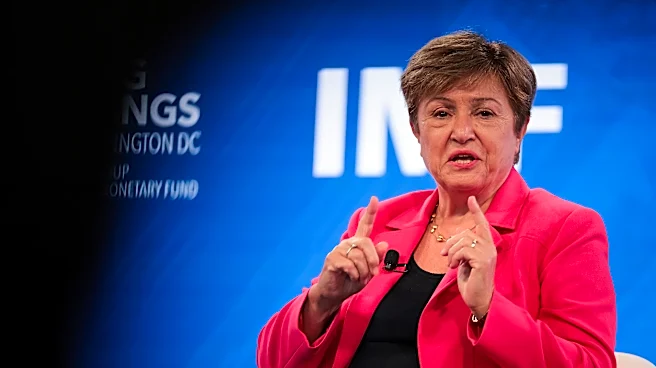
CETEx, in collaboration with the International Monetary Fund and the World Bank, held an event on the sidelines of their Annual Meetings to discuss forthcoming research on how prudential rules affect national development banks (NDBs). The research, presented
in Bangkok on October 16, 2026, explores whether the current regulatory treatment of NDBs constrains their ability to mobilize finance for the climate transition. The discussion focused on whether prudential frameworks can better recognize the unique mandates, funding structures, and risk profiles of NDBs while maintaining financial stability. Specific areas of examination included the sovereign floor, large exposure rules, and the prudential treatment of infrastructure and equity exposures, which may not accurately reflect the actual risks faced by NDBs. The event brought together NDBs, policymakers, researchers, and financial sector experts to explore pathways for reform.
Why It's Important?
The findings of this CETEx research are crucial for the U.S. and global efforts to combat climate change, as national development banks play a significant role in financing long-term development and infrastructure, particularly in areas where private investment is insufficient. If current prudential rules inadvertently hinder NDBs' capacity to mobilize climate finance, it could slow down the global transition to a low-carbon economy, impacting U.S. climate goals and economic interests. The U.S. has a vested interest in a stable global climate and economy, and effective climate finance is a key component. Rethinking these regulatory frameworks could unlock substantial capital for climate-resilient projects, potentially creating new markets and investment opportunities for U.S. businesses and investors. Conversely, a failure to address these constraints could lead to increased climate-related risks and economic instability globally, indirectly affecting the U.S. economy.
What's Next?
The CETEx research and the discussions held in Bangkok are expected to inform national regulators and international standard-setters on potential reforms to prudential frameworks. The goal is to introduce greater flexibility where justified by underlying risks, without compromising financial stability. The collaboration between CETEx and PT SMI, formalized by a new agreement, suggests ongoing efforts to deepen research and dialogue in this area. Future steps will likely involve continued engagement with policymakers to advocate for regulatory adjustments that better reflect the distinct characteristics of NDBs. This could lead to a more proportionate approach to regulation, enabling well-capitalized NDBs to scale up climate finance. The insights from this research will also contribute to the broader conversation on how financial regulation can support, rather than impede, the necessary investments for the climate transition.
Beyond the Headlines
The debate over prudential rules and climate finance highlights a fundamental tension between financial stability and the urgent need for climate action. Ethically, the question arises whether existing regulations, designed for commercial banks, are appropriate for institutions with a public mandate to address market failures, such as climate change. Legally, reforms could involve reinterpreting or amending international financial standards to create a more nuanced regulatory environment for NDBs. Culturally, this discussion reflects a growing awareness that financial systems must evolve to address global challenges beyond traditional profit motives. The long-term implications could include a redefinition of 'risk' in the context of climate change, where the risks of inaction might outweigh the perceived risks of more flexible prudential rules for climate-focused investments. This shift could foster a more integrated approach to finance, where environmental sustainability is considered a core component of financial stability and economic development.