




What's Happening?
The inaugural Durham Fringe Festival commenced on October 30, marking a 10-day celebration of local performing artists across 25 venues throughout Durham, North Carolina. This new festival is a key part of the Carolina Theatre's centennial celebrations,
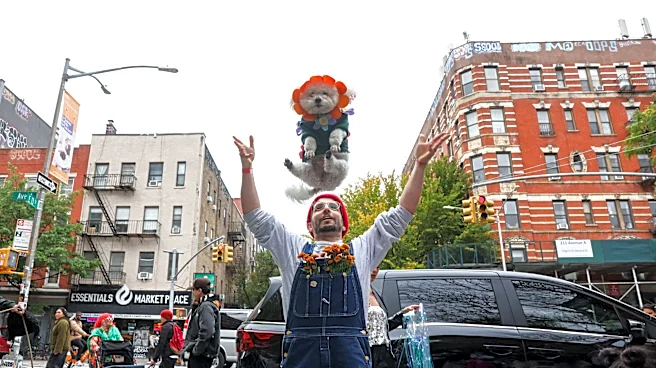
commemorating 100 years since its opening in 1926. The event features 50 performing artists, offering a diverse range of performances including dance, music, puppetry, clowning, live painting, and spoken word. Performances are staged in various locations, from traditional venues like Mettlesome Theater and The Fruit to more unconventional spaces such as bars and bookstores. The festival aims to provide a platform for Durham-based artists to present experimental and daring work, with organizers covering venue coordination, ticketing, and technical fees. Funding for the festival primarily comes from a capital campaign by the Carolina Theatre, supplemented by city funding.
Why It's Important?
The Durham Fringe Festival represents a significant cultural and economic development for the city. By providing a platform for 50 local artists across 25 venues, it stimulates the local arts scene, offering exposure and opportunities for performers who might otherwise struggle to find spaces for their experimental work. This initiative also aligns with the Carolina Theatre's mission as an economic driver for downtown Durham, supporting small businesses and fostering community engagement. The festival's focus on local talent helps to cultivate a unique cultural identity for Durham, attracting audiences and potentially boosting local tourism. Furthermore, by encouraging diverse and unconventional performances, it enriches the cultural landscape, making the arts more accessible and engaging for a broader public. The success of this inaugural festival could pave the way for its expansion, potentially drawing national and international attention to Durham's artistic community.
What's Next?
Following its inaugural run, organizers Randy McKay, President and CEO of the Carolina Theatre, and festival organizer Myra Weise plan to survey audience members and artists to assess the festival's effectiveness and gather feedback. This data will be crucial for refining future iterations of the event. Over the next five years, McKay hopes to expand the festival, potentially inviting artists from outside Durham to raise its profile, while ensuring that a majority of slots remain reserved for local artists. The festival's success could lead to increased funding and community support, allowing for greater artistic ambition and broader reach. The experimental nature of the festival also suggests that future events will continue to push creative boundaries, fostering an environment of innovation within Durham's arts community. The festival's continuation will solidify its role as a cultural cornerstone for the city.
Beyond the Headlines
The Durham Fringe Festival's launch carries deeper implications for the role of arts in urban development and community building. Modeled after the renowned Edinburgh Festival Fringe, it embodies a spirit of artistic freedom and accessibility, allowing artists to bypass traditional gatekeepers and directly engage with audiences. This approach can democratize the arts, making them less exclusive and more reflective of diverse community voices. The festival's commitment to local artists also strengthens community ties and fosters a sense of place, celebrating the unique creative talent within Durham. Ethically, it champions the value of artistic expression and experimentation, providing a safe space for artists to take risks and explore challenging themes. Culturally, it contributes to Durham's identity as a vibrant and progressive city, attracting creative individuals and businesses, and enhancing its overall appeal as a place to live and visit.