




What's Happening?
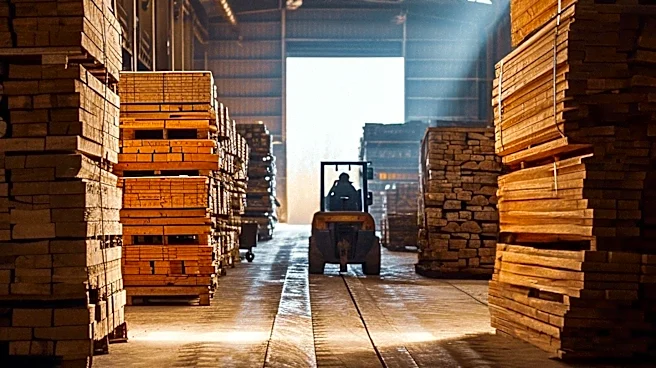
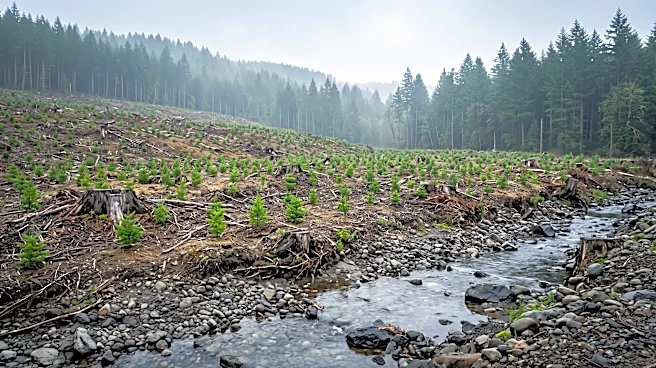
British Columbia's Ministry of Forests has initiated a pilot program for a new 'Working Forest Landscape Model.' This model aims to streamline commercial timber harvesting by dividing forests into three zones: a working forest zone for commercial logging,
a multiple-use zone for biodiversity and ecosystem functions, and a conservation and protection zone. The primary goal is to achieve an annual timber harvest of 45 million cubic meters while reducing bureaucratic hurdles like individual cutblock permits. Forest Minister Ravi Parmar stated that this area-based management approach would provide stability for forestry workers. The model also includes a 'no-net-loss' principle, where new land would be added to a zone if land is removed from it. This pilot phase is expected to be a multi-year process before full implementation. The initiative comes as the province's forestry sector faces challenges such as limited wood fiber access, climate-driven wildfires, market volatility, rising operating costs, and U.S. lumber tariffs.
Why It's Important?
The proposed 'Working Forest' model in British Columbia carries significant implications for the U.S. forestry industry and trade relations. U.S. lumber tariffs have been a persistent issue, and if this model successfully increases timber supply and reduces operating costs in B.C., it could impact the competitiveness of U.S. lumber producers. A more stable and predictable timber supply from B.C. might influence lumber prices and trade dynamics between the two countries. Conversely, if the model leads to unsustainable practices or increased environmental concerns, it could trigger further trade disputes or calls for stricter import regulations from the U.S. The 'no-net-loss' principle, while intended to balance conservation and industry needs, raises questions about how ecologically valuable forests will be protected, a concern that could resonate with U.S. environmental groups and policymakers. The model's success or failure could set a precedent for how other regions, including parts of the U.S., approach forest management in the face of similar economic and environmental pressures.
What's Next?
The pilot program for the 'Working Forest Landscape Model' near Campbell River marks the beginning of a multi-year exploration phase. During this period, the province will assess the model's effectiveness in balancing commercial timber harvest with environmental protection and community interests. Key stakeholders, including First Nations, environmental advocates, and forestry companies, will likely continue to engage with the government regarding the model's implementation and potential impacts. The province will need to clarify how the 'no-net-loss' principle will be applied, particularly concerning the designation of new land for protection or harvest. The outcome of this pilot will determine whether the model is expanded across British Columbia and could influence future forestry policies. The ongoing U.S. lumber tariffs will also remain a factor, with the model's success potentially altering the dynamics of cross-border timber trade and negotiations.
Beyond the Headlines
The 'Working Forest' model delves into the complex ethical and economic dimensions of natural resource management. The historical context reveals that similar 'working forest' initiatives have been met with opposition, highlighting the persistent tension between economic development and environmental conservation. The model's success hinges on its ability to genuinely integrate First Nations' perspectives and ensure that local communities benefit from forestry activities, moving beyond a purely industrial approach. The debate over 'cutblock by cutblock permitting' versus area-based management reflects a broader philosophical shift in how natural resources are governed, moving towards more holistic, yet potentially more complex, planning. The long-term implications could include a redefinition of sustainable forestry practices, where economic viability is more closely tied to ecological stewardship and social equity. The model's ability to address climate-driven challenges like wildfires will also be a critical measure of its efficacy, potentially influencing how other regions adapt their forestry strategies to a changing climate.