





What's Happening?
Robigo, a biotechnology company, has successfully closed an undisclosed Series A funding round led by Leaps by Bayer, with additional participation from Illumina Ventures, SVG Thrive, Congruent Ventures, and Endeavor8. The company specializes in developing
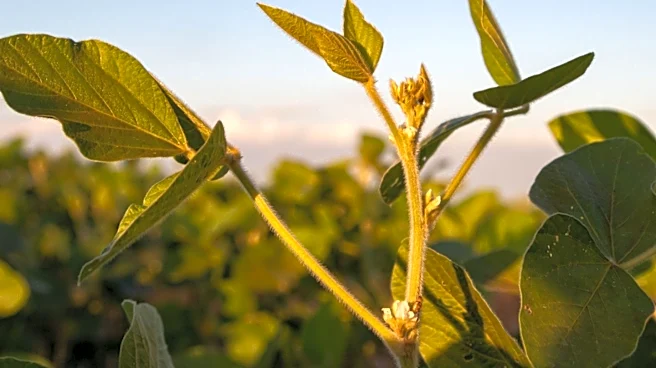
crop protection products using genetically engineered microorganisms, RNA interference (RNAi), and CRISPR technologies. This new capital is earmarked to accelerate the commercial launch of microbial biopesticides in the United States, specifically targeting fungal diseases in soybeans and specialty crops. Robigo also plans to expand its product pipeline to address additional soil-borne pathogens across broadacre agriculture, a market estimated to be worth $10 billion. Leaps by Bayer emphasized Robigo's 'engine, not product' approach, highlighting the scalability of its ARGO platform, which uses synthetic biology and computational design to engineer living microbes for targeted crop protection. This platform aims to silence essential genes in plant pathogens and significantly reduce development timelines from the industry standard of three to five years to under 20 months.
Why It's Important?
This investment signifies a growing trend in U.S. agriculture towards advanced biological solutions that offer sustainable alternatives to conventional chemical pesticides. The focus on genetically engineered microorganisms represents a significant leap in addressing long-standing challenges associated with biological crop protection, such as efficacy, consistency, and cost. By targeting economically impactful diseases like Sudden Death Syndrome (SDS) in soybeans, which costs U.S. farmers between $200 million and $500 million annually, Robigo's technology has the potential to deliver substantial economic benefits to American farmers. The ability to deploy a platform across multiple crops and pathogens, as highlighted by Leaps by Bayer, suggests a scalable solution that could reduce reliance on traditional chemical inputs, aligning with increasing consumer and regulatory demands for more environmentally friendly farming practices. This development could also spur further innovation and investment in the U.S. agricultural biotechnology sector, fostering a new generation of crop protection tools.
What's Next?
Robigo plans to proceed with the commercial launch of its microbial biopesticides in the U.S., initially focusing on fungal diseases in soybeans and specialty crops. Following this, the company intends to expand its pipeline to tackle other soil-borne pathogens across broadacre agriculture. The success of these initial launches will be crucial in demonstrating the efficacy and commercial viability of their engineered microbe technology. Bayer anticipates value creation through both proprietary product sales and strategic partnerships, suggesting potential collaborations with larger agricultural companies seeking access to synthetic biology-enabled crop protection technologies. This flexibility could lead to broader adoption of Robigo's platform across the U.S. agricultural landscape. Furthermore, the integration of synthetic biology with biological crop protection is expected to improve consistency and performance, potentially setting new industry standards for biologicals.
Beyond the Headlines
The merging of biological crop protection with synthetic biology, as exemplified by Robigo's approach, raises deeper implications for the future of agriculture. While Robigo's products are considered biologicals due to their active living microbes, their reliance on genetically engineered microorganisms introduces a new dimension to the debate surrounding genetically modified organisms (GMOs) in food production. This could lead to increased scrutiny and regulatory discussions regarding the classification and oversight of such advanced biological solutions. Ethically, the precision and design capabilities of synthetic biology offer the promise of more targeted and efficient pest control, potentially reducing off-target effects and environmental impact compared to broad-spectrum chemicals. However, it also necessitates careful consideration of the long-term ecological consequences of introducing engineered microbes into agricultural ecosystems. This development represents a significant shift from traditional discovery-based biologicals to a more engineered and designed approach, potentially transforming how crop protection is conceived and implemented globally.