



What's Happening?
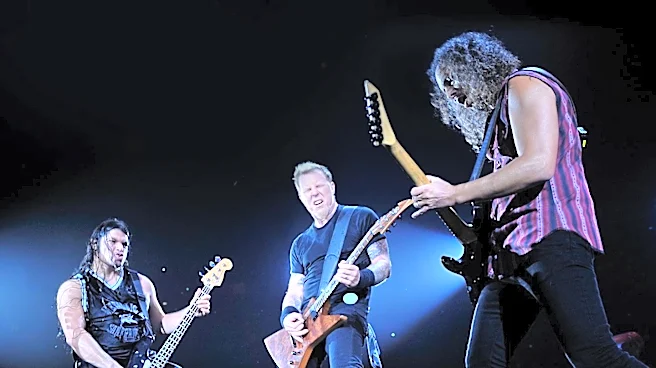
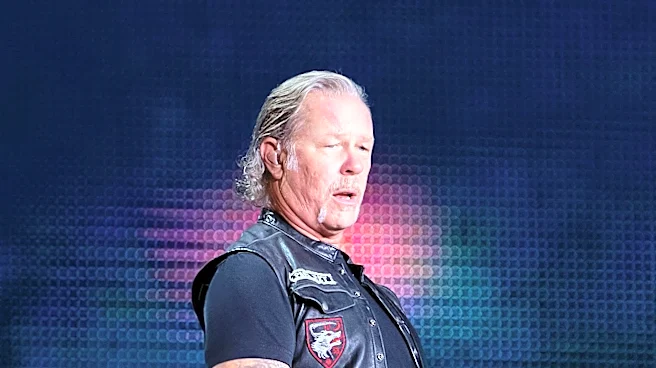
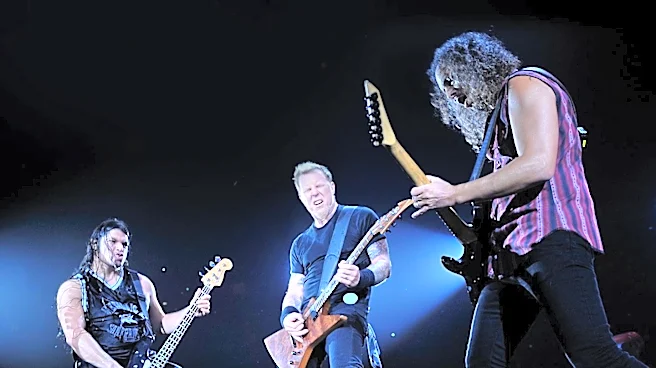
Journalist and author Matt Taibbi is defending Metallica frontman James Hetfield following comments Hetfield made at a Las Vegas Sphere concert. Hetfield stated that Metallica's purpose was not to influence the audience with political statements, contrasting
with other entertainers who have addressed issues like the situation in Gaza. Hetfield emphasized that Metallica's agenda is focused on 'love, energy and heavy music.' This stance has drawn criticism, with some arguing that all art inherently carries a political message, especially in the current global climate. Taibbi's defense aligns with the view that art can exist on a 'magical higher plane' separate from immediate political concerns, a perspective that is being challenged by those who believe artists have a responsibility to address societal issues. The debate highlights a broader discussion about the role of artists and their platforms in contemporary society.
Why It's Important?
This discussion is important as it reflects a growing tension within the entertainment industry and broader society regarding the intersection of art and politics. For artists, the decision to engage or disengage with political topics can significantly impact their public image, fan base, and critical reception. For audiences, it raises questions about the expectations placed on public figures and the nature of artistic expression. Taibbi's involvement, as a prominent journalist known for his critical commentary, lends weight to the argument for artistic autonomy from political pressures. Conversely, the backlash against Hetfield underscores a societal expectation for public figures to use their platforms for social commentary, particularly on humanitarian issues. This debate influences how art is consumed, interpreted, and valued, potentially shaping future trends in artistic expression and public discourse.
What's Next?
The debate surrounding artists' political engagement is likely to continue, with more public figures potentially taking stances similar to Hetfield's or, conversely, becoming more vocal on social and political issues. This could lead to further polarization within fan communities and the entertainment industry. Artists may face increased pressure from both sides to either speak out or remain neutral, influencing their creative choices and public appearances. Media outlets and critics will likely continue to analyze and interpret these stances, further fueling the discussion. The ongoing conversation may also prompt more nuanced discussions about the definition of 'political art' and the responsibilities of artists in a globally connected world.
Beyond the Headlines
Beyond the immediate controversy, this event touches upon deeper philosophical questions about the purpose of art and the artist's role in society. Is art primarily for escapism and aesthetic pleasure, or does it inherently carry a responsibility to reflect and comment on the human condition, including its political dimensions? The argument that 'all art is political' suggests that even silence or neutrality can be interpreted as a political stance, particularly in times of crisis. This perspective challenges the notion of art as a purely apolitical endeavor. The discussion also highlights the evolving nature of celebrity and influence, where public figures are increasingly expected to be moral compasses or advocates, rather than solely entertainers. This shift can lead to greater scrutiny of artists' personal beliefs and public statements, blurring the lines between their artistic output and their civic duties.