







What's Happening?
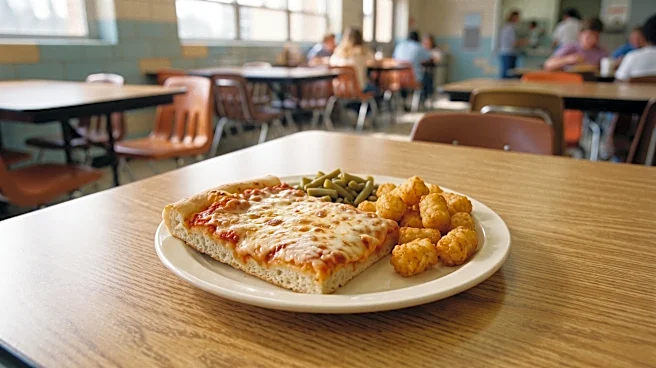
Federal school-lunch materials from the 1980s and 1990s confirm that many memorable cafeteria foods were indeed official parts of the U.S. school food playbook. These documents, including USDA manuals and reports, detail the prevalence of items such as
rectangular pizza, Salisbury steak, Tater Tots, fruit cocktail, chocolate milk, peanut butter and jelly sandwiches, green beans, gelatin cubes, commodity cheese, corn dogs, Sloppy Joes, and fish sticks. For instance, a 1988 USDA recipe specified pizza baked on large sheet pans and cut into 20 pieces, explaining the iconic rectangular shape. The 1990 USDA manual listed Salisbury steak as part of a 'Traditional School Lunch' exercise and included chocolate milk as an option. Commodity cheese, supplied by the government, saw a significant increase in donations to the National School Lunch Program during the 1980s.
Why It's Important?
This documentation provides a factual basis for shared cultural memories of school lunches, validating the experiences of generations of American students. It highlights the standardized nature of school food programs during these decades, influenced by federal guidelines and commodity distribution. The widespread presence of these specific foods reflects the nutritional and logistical considerations of the time, aiming to provide cost-effective and familiar meals to a large student population. Understanding these historical menus offers insight into the evolution of school nutrition policies and the role of government in shaping dietary habits for millions of children across the U.S. It also underscores how federal programs can create a common culinary experience across diverse regions.
What's Next?
While these specific menus are largely historical, the legacy of these cafeteria foods continues to influence school meal planning and public perception of institutional food. Discussions around school nutrition often reference these past offerings, either as nostalgic touchstones or as examples of less healthy options that modern programs aim to improve upon. Future policy decisions regarding school lunches may continue to balance nutritional guidelines with student preferences and budgetary constraints, drawing lessons from the successes and criticisms of past programs. The ongoing evolution of school cafeteria menus will likely continue to be a topic of public interest, reflecting broader societal changes in diet, health, and food culture.
Beyond the Headlines
The prevalence of these specific foods in school cafeterias during the 80s and 90s reflects broader societal trends in food production, government subsidies, and dietary understanding. The significant role of 'commodity cheese,' for example, points to agricultural policies that influenced food distribution. The standardization of meals across the country, as evidenced by USDA manuals, speaks to an era of centralized planning for public services. This historical context can inform current debates about food deserts, childhood obesity, and the role of schools in promoting healthy eating habits. The shared nostalgia for these foods also highlights the powerful connection between food, memory, and cultural identity, demonstrating how institutional meals can become a significant part of a generation's collective experience.