




What's Happening?
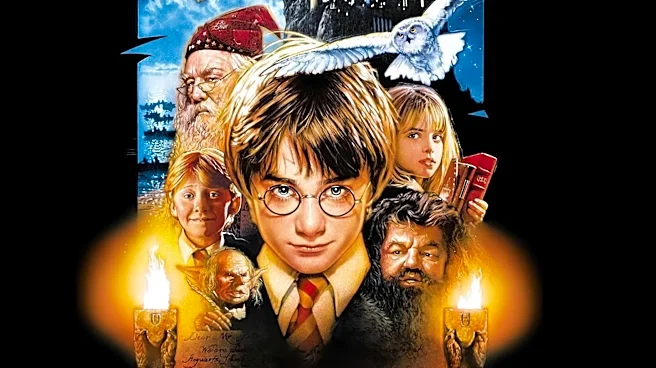
HBO has announced the casting of Harry Gilby as Charlie Weasley for the first season of its multi-season 'Harry Potter' adaptation. This decision marks a significant move to include a character largely absent from the original eight films, signaling the series'
intention to delve deeper into the book's narrative. The casting announcement, made on October 27, also confirmed Jasper Talbot as James Potter and Hannah Chinn as Lily Potter, bringing Harry's parents into a more prominent role in Season 1. While James and Lily had brief appearances in the films, Charlie Weasley, known for his work with dragons in Romania, was entirely omitted. The series, which premieres on December 25, 2026, on HBO and HBO Max, aims to adapt all seven novels, with Season 2 already greenlit. Francesca Gardiner serves as showrunner, and Mark Mylod is among the directors. Warwick Davis is confirmed to return as Professor Flitwick, the only actor reprising his role from the films.
Why It's Important?
The inclusion of Charlie Weasley and the expanded roles for James and Lily Potter in HBO's 'Harry Potter' series is important for several reasons. It demonstrates a commitment to a more comprehensive adaptation of J.K. Rowling's books, potentially satisfying fans who felt the films overlooked significant characters and plotlines. By featuring Charlie, the series can explore the magical world beyond Hogwarts, specifically his dragon-related work in Romania, which adds depth and new narrative possibilities. This approach could set a precedent for future adaptations of beloved book series, encouraging creators to embrace the full scope of the source material rather than condensing it for cinematic constraints. For HBO, this strategy could attract a broader audience, including purist fans, and differentiate its series from the highly successful film franchise. The decision also highlights the growing trend of streaming platforms investing in long-form adaptations to fully realize complex fictional universes.
What's Next?
The 'Harry Potter' series is set to premiere on December 25, 2026, on HBO and HBO Max. While Charlie Weasley's casting establishes his presence, the specific details of his scenes and the extent of his role in Season 1 remain unconfirmed. The first novel mentions Hagrid sending his baby dragon Norbert to Charlie's team in Romania, providing a natural entry point for the character. However, HBO has not yet confirmed if this dragon-transfer scene has been scripted or filmed. The series has already been greenlit for a second season, indicating a long-term commitment to adapting all seven novels. Future announcements are expected to reveal more about the narrative direction and how the series will integrate characters and storylines that were previously marginalized. The success of this expanded adaptation could influence future decisions regarding the pacing and scope of subsequent seasons.
Beyond the Headlines
The decision to include characters like Charlie Weasley and give more screen time to James and Lily Potter in the new 'Harry Potter' series reflects a broader shift in how beloved literary works are adapted for the screen. With the rise of streaming platforms, there's an increasing capacity and demand for longer, more detailed adaptations that can explore the nuances and subplots often cut from feature films. This approach allows for a richer, more faithful portrayal of the source material, potentially fostering a deeper connection with the audience. It also highlights the evolving relationship between creators and fan expectations, where a comprehensive adaptation can be a significant draw. Ethically, it addresses the long-standing fan desire for fidelity to the original texts, offering a more complete experience. Culturally, it reinforces the enduring power of the 'Harry Potter' universe and its ability to be reinterpreted and expanded for new generations, while also setting a new standard for how literary adaptations are approached in the digital age.