









What's Happening?
Eaton, an intelligent power management company, has recently seen a wave of positive earnings estimate revisions and more bullish analyst views. This increased confidence is primarily driven by the company's strong performance in its electrical and aerospace
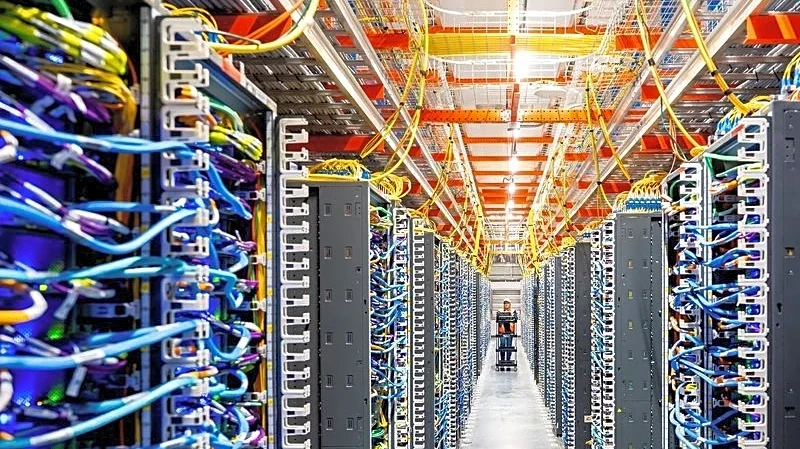
divisions, coupled with a growing backlog in data center projects and numerous capacity expansion initiatives. Analysts are updating their financial models to reflect Eaton's robust data center pipeline, significant capacity build-out in Electrical Americas, and a strategic shift in its portfolio towards higher-value electrical and aerospace markets. The company's investment narrative projects substantial growth, with anticipated revenues of US$43.4 billion and earnings of US$7.5 billion by 2029. This forecast is based on analysts baking in a 13.0% yearly revenue growth and an earnings increase of US$3.7 billion from its current US$3.8 billion. The positive revisions highlight a belief in Eaton's ability to scale its electrical businesses and successfully integrate acquired assets like Boyd and Fibrebond without compromising profit margins.
Why It's Important?
The upgraded earnings estimates for Eaton are significant for the U.S. business landscape, particularly within the industrial and technology sectors. This positive outlook signals strong investor confidence in companies focused on critical infrastructure, such as power management and data centers, which are essential for supporting the nation's digital economy and energy transition. The projected growth in Eaton's electrical and aerospace segments indicates a robust demand for advanced power solutions and aerospace components, reflecting broader trends in industrial expansion and technological advancement. For investors, this suggests potential upside, with Eaton's fair value indicating a 30% potential increase. The company's strategic focus on higher-margin segments and successful integration of acquisitions could set a precedent for other industrial firms seeking sustainable growth. Conversely, operational risks, such as weaker regional performance or challenges in legacy vehicle markets, could impact profitability if restructuring efforts do not effectively close the gap with higher-margin segments, underscoring the importance of execution on these expansion and data center programs.
What's Next?
The immediate focus for Eaton will be on the execution of its electrical expansions and data center programs, as these are identified as the main short-term swing factors for its financial performance. The company will need to demonstrate its ability to deliver the earnings profile analysts are now assuming, especially while managing increased debt and potential sensitivity to any earnings disappointments. Investors will closely monitor the progress of these capacity projects and the integration of acquired assets. The planned Mobility separation is another key event that will influence Eaton's future earnings profile. The company's ability to maintain its growth trajectory and profitability will depend on its success in these areas, as well as its continued strategic tilt towards higher-value electrical and aerospace end markets. Analysts will continue to refine their models based on these developments, and any deviations from the projected growth could lead to further adjustments in stock valuations.
Beyond the Headlines
Beyond the immediate financial implications, Eaton's upgraded outlook reflects a broader trend in the U.S. economy towards increased investment in sustainable and intelligent power management solutions. The company's commitment to reducing greenhouse gas emissions, with a goal of a 50% cut by 2030 and net-zero by 2050, highlights the growing importance of environmental, social, and governance (ESG) factors in corporate strategy and investor decisions. This focus on sustainability, coupled with its role in critical infrastructure like data centers, positions Eaton at the intersection of technological advancement and environmental responsibility. The success of companies like Eaton in scaling electrical businesses and integrating new assets also underscores the ongoing consolidation and strategic realignment within the industrial sector, as firms seek to optimize portfolios for higher growth and profitability in evolving markets. This trend could lead to long-term shifts in industrial manufacturing and supply chains, emphasizing efficiency, innovation, and sustainability.