





What's Happening?
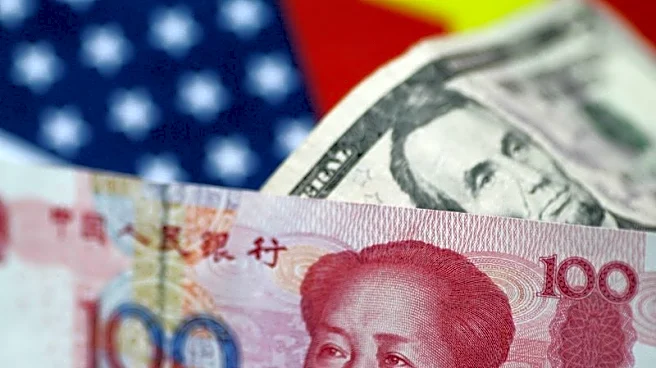
Investors are increasingly seeking the safety of the U.S. dollar and U.S. Treasuries due to concerns over high public debt, weak growth, and social strains in parts of Europe, particularly France. This shift in investor confidence is leading to a rapid
change in demand for dollar exposure and hedging tools. The article highlights that this trend benefits certain stocks, such as Bank of N.T. Butterfield & Son and Flow Traders, which are exposed to the U.S. dollar safe-haven narrative. Bank of N.T. Butterfield & Son, an offshore-focused lender and wealth manager, profits from cross-border money flows, foreign exchange (FX), custody, and dollar liquidity services. Flow Traders, a multi-asset liquidity specialist, earns revenue by providing liquidity during volatile periods when cross-border trading and FX hedging activity increase around moves into the U.S. dollar.
Why It's Important?
The increased demand for U.S. dollar safety underscores the dollar's role as a global reserve currency and a haven asset during times of international economic and political instability. This trend can significantly impact U.S. financial markets by driving capital inflows into dollar-denominated assets, including U.S. Treasuries and specific U.S.-linked equities. Companies like Bank of N.T. Butterfield & Son, with its offshore operations and FX services, and Flow Traders, which thrives on market volatility and hedging activities, stand to gain from this shift. Conversely, this could indicate a weakening economic outlook or increased risk perception in other global regions, potentially affecting U.S. export markets or international investment strategies. The sustained demand for dollar safety could also influence U.S. monetary policy considerations, as a stronger dollar can impact inflation and trade balances.
What's Next?
Should European economic and social conditions continue to be volatile, the demand for U.S. dollar safety is likely to intensify. This could lead to further capital reallocation towards U.S. assets, potentially strengthening the dollar against other major currencies. Companies positioned to benefit from this trend, such as those in the financial services sector with significant FX and hedging operations, may see continued growth. Investors will likely monitor global geopolitical and economic developments closely to anticipate further shifts in currency demand and adjust their portfolios accordingly. The U.S. Treasury market could experience sustained demand, potentially influencing bond yields and borrowing costs for the U.S. government.
Beyond the Headlines
The phenomenon of the U.S. dollar acting as a safe haven during global instability highlights deeper structural issues within the international financial system. It reflects a persistent reliance on the dollar despite ongoing discussions about diversifying global reserve currencies. This dynamic can create a feedback loop where global crises inadvertently strengthen the U.S. financial position, even as the U.S. itself faces domestic economic challenges. The ethical implications arise from the fact that instability in one region can directly translate into financial gains for entities in another, raising questions about global economic interdependence and the distribution of risk and reward. This trend also underscores the importance of robust financial infrastructure and regulatory frameworks in the U.S. that can accommodate significant capital inflows without destabilizing domestic markets.