
What's Happening?
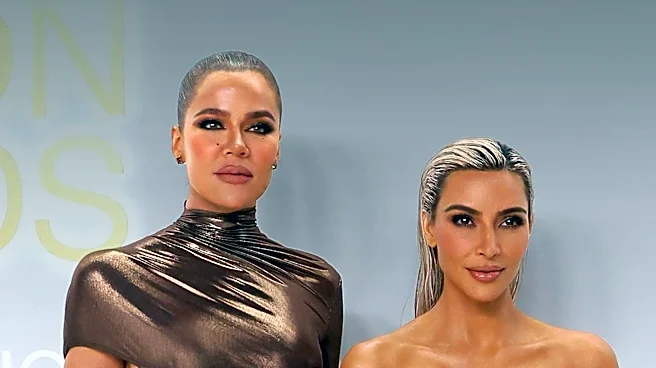
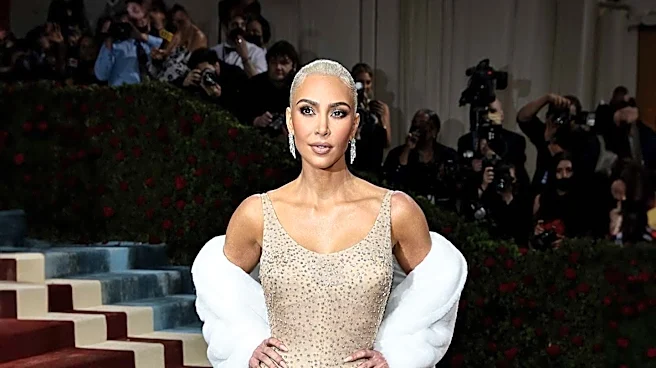
Kim Kardashian deliberately chose to wear Marilyn Monroe's iconic 1962 Jean Louis gown to the 2022 Met Gala, fully aware that it would generate controversy. This revelation comes from Jonathan Van Meter,
author of her new biography, 'Citizen Kim.' Kardashian reportedly told Van Meter, 'Of course I knew it,' regarding the anticipated negative reactions. The dress, famously worn by Monroe when she sang 'Happy Birthday' to President John F. Kennedy, sparked a divided response when Kardashian appeared in it. Critics raised concerns about potential damage to the vintage garment, though Ripley's Believe It Or Not!, which loaned the dress, stated it remained in the same condition. Designer Bob Mackie, who sketched the original dress, expressed that no one else should be seen in it, while TCM host Alicia Malone noted similarities between Monroe and Kardashian in their publicity savvy and influence on beauty ideals.
Why It's Important?
Kim Kardashian's intentional use of a historically significant garment to provoke public reaction highlights a calculated strategy in modern celebrity culture. This incident underscores how public figures leverage controversy to maintain relevance and generate media attention, blurring the lines between fashion, history, and spectacle. The debate surrounding the dress also brings to the forefront discussions about the preservation of historical artifacts versus their use in contemporary contexts, and the ethical considerations involved. Furthermore, the comparison drawn between Kardashian and Monroe by cultural commentators suggests a continuity in how women in the public eye can shape beauty standards and command public discourse, even decades apart. This event serves as a case study in the power of celebrity to ignite widespread debate and influence cultural narratives.
What's Next?
This revelation from Kardashian's biographer reinforces her reputation as a master of media manipulation and strategic self-promotion. Future public appearances and fashion choices by Kardashian will likely be viewed through this lens, with audiences and critics anticipating deliberate provocations. The incident may also influence how museums and collectors approach lending historical garments for public display, potentially leading to stricter guidelines or increased scrutiny. For Kardashian, continuing to embrace controversy as a tool for engagement suggests that her brand will likely remain at the center of cultural conversations, whether through fashion, business, or personal life. The ongoing discussion about the Monroe dress will likely remain a significant moment in her public narrative.
Beyond the Headlines
The controversy surrounding Kim Kardashian wearing Marilyn Monroe's dress extends beyond a mere fashion moment, touching upon deeper cultural and ethical implications. It raises questions about ownership of cultural heritage and the responsibility that comes with interacting with historical artifacts. The act can be seen as a commentary on the commodification of icons and the blurring of lines between homage and appropriation. Ethically, it sparks debate on whether historical items should be preserved untouched or reinterpreted in contemporary contexts, and who has the authority to make such decisions. Culturally, it reflects a society fascinated by the intersection of past glamour and present-day celebrity, where the shock value often outweighs traditional reverence. This event underscores a broader trend in entertainment where historical significance is often recontextualized for modern spectacle.