




What's Happening?
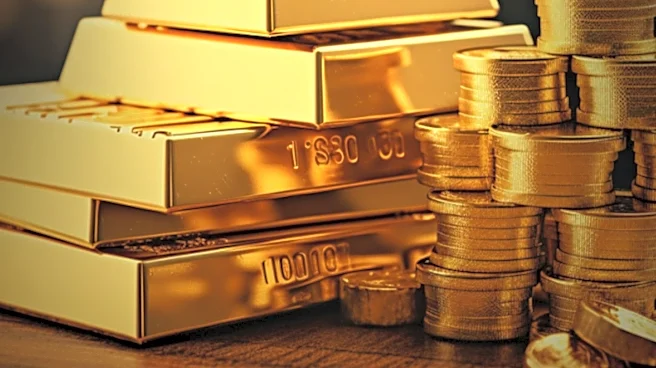
Gold prices have reached a seven-week high following a significant drop in US nonfarm payrolls for July, which has reduced the likelihood of a Federal Reserve interest rate hike in September. Spot gold prices jumped above $4,360 per ounce, marking a more
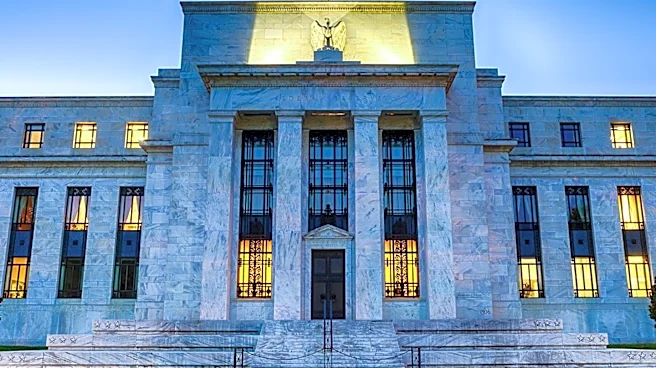
than 3% increase on the day and the highest level since June 17. The US Bureau of Labor Statistics reported a decline of 23,000 in nonfarm payrolls for July, a sharp reversal from a revised gain of 20,000 in June, and far below the expected increase of 80,000. This unexpected contraction in employment has reshaped market expectations, with rate futures now pricing a 45% chance of a September rate hike, down from 57% prior to the report. The combination of declining energy prices and reduced rate hike odds is exerting pressure on the dollar, thereby supporting gold prices. Analysts predict that gold could reach $5,000 per ounce by the first half of 2027, driven by a softer dollar and lower real yields.
Why It's Important?
The surge in gold prices is significant as it reflects broader economic trends and investor sentiment. The weaker-than-expected US jobs data has led to a reassessment of the Federal Reserve's monetary policy, with reduced expectations for a rate hike. This has implications for the US dollar, which is likely to remain under pressure, making gold more attractive as a safe-haven asset. The potential for gold to reach $5,000 per ounce by 2027 suggests a shift in investment strategies, with investors seeking refuge in precious metals amid economic uncertainty. The rally in gold prices also highlights the interconnectedness of global markets, as changes in US economic indicators can have far-reaching effects on commodity prices and investor behavior.
What's Next?
The upcoming inflation and employment data releases will be crucial in determining the future trajectory of gold prices. If inflation remains subdued and employment figures continue to disappoint, the Federal Reserve may opt to hold interest rates steady, further supporting gold's rally. Conversely, stronger-than-expected inflation data could prompt a hawkish response from the Fed, potentially tempering the dollar weakness that has been driving gold prices higher. Investors will be closely monitoring these developments, as well as geopolitical factors that could influence market sentiment and the demand for safe-haven assets.