









What's Happening?
A new study has identified key factors contributing to rockburst risks in coal mines using a factor-reduction-based method. This approach aims to simplify risk evaluation by focusing on the most critical factors, thereby improving the accuracy and practicality
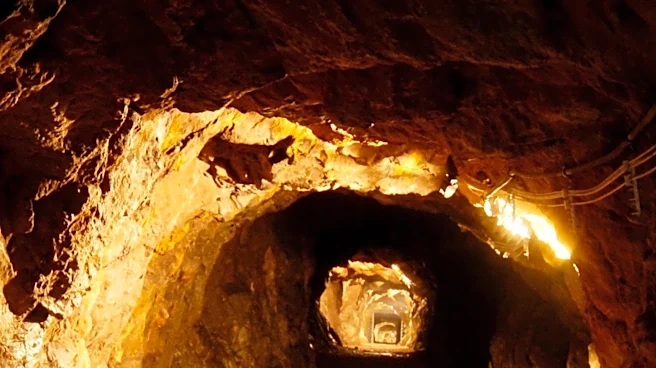
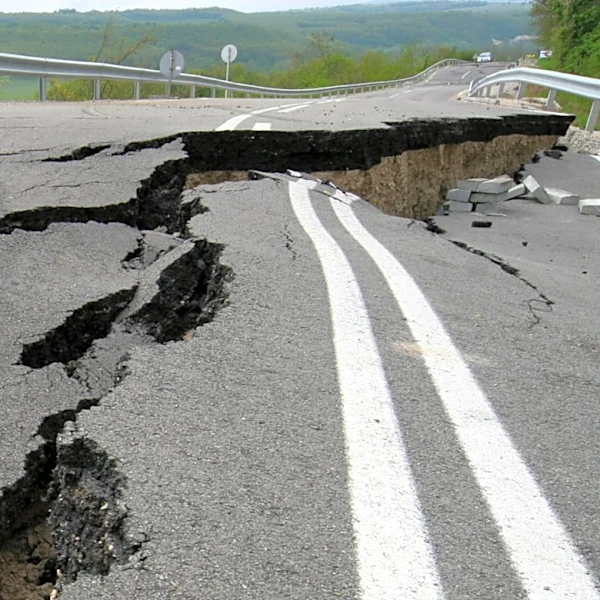
of risk assessments. Rockbursts, which are severe dynamic hazards in underground coal mining, occur due to the sudden release of accumulated elastic strain energy in coal-rock masses. The study, published in Scientific Reports, highlights that rockbursts have become more frequent and destructive in China, affecting 138 mines across 15 provinces. The research employs an integrated approach combining theoretical analysis, mathematical modeling, and field testing to identify the geological and mining factors influencing rockburst hazards. The study identifies coal seam thickness variation, geological structures, and floor coal thickness as the primary factors controlling rockburst risk.
Why It's Important?
The findings of this study are significant for improving safety in coal mining operations. By isolating the most critical factors influencing rockburst risks, the research provides a more precise and practical framework for risk assessment. This can lead to more effective prevention and control strategies, enhancing safety management in coal mines. The study's approach reduces the complexity of existing risk assessments, which often incorporate numerous overlapping factors, thereby hindering the identification of key risk drivers. The research offers a refined hazard assessment model that enables explicit inference and clear risk classification, which is crucial for developing targeted risk mitigation strategies. This advancement not only contributes to safer mining operations but also supports the mining industry in managing increasingly challenging underground environments.
What's Next?
The study's findings are expected to inform the development of tailored prevention and control measures in coal mines with similar geological conditions. The factor reduction method's applicability was demonstrated in the Yadian Coal Mine, where risk assessments matched field realities. This suggests that the approach could be adopted more widely across the mining industry to enhance safety management. Future research may focus on further refining the factor reduction method and exploring its application in different mining contexts. Additionally, the study's insights could lead to the development of new technologies and practices for monitoring and mitigating rockburst risks, ultimately contributing to the sustainability and safety of coal mining operations.