





What's Happening?
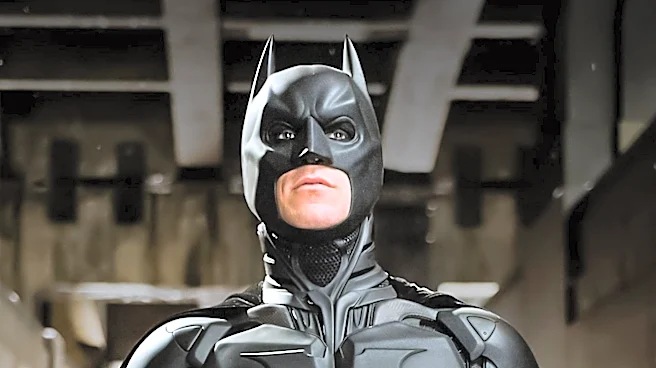
The Dark Knight Trilogy, comprising 'Batman Begins' (2005), 'The Dark Knight' (2008), and 'The Dark Knight Rises' (2012), has been a significant success both critically and commercially. Christopher Nolan wrote and directed all three films. Key actors
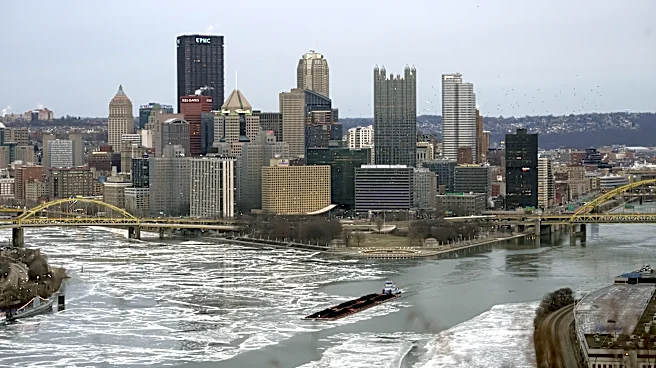
Christian Bale, Michael Caine, Gary Oldman, Morgan Freeman, and Cillian Murphy appeared in all installments, portraying Bruce Wayne/Batman, Alfred Pennyworth, Jim Gordon, Lucius Fox, and Jonathan Crane/The Scarecrow, respectively. Heath Ledger received an Academy Award for 'Best Supporting Actor' for his role as The Joker in 'The Dark Knight,' posthumously. Composer Hans Zimmer collaborated with James Newton Howard on 'Batman Begins' and 'The Dark Knight,' and solely composed the music for 'The Dark Knight Rises.' Chicago, IL, served as Gotham City in the first two films, while Pittsburgh, PA, was used for 'The Dark Knight Rises.'
Why It's Important?
The commercial and critical success of The Dark Knight Trilogy underscores the enduring appeal and profitability of the superhero genre in the U.S. film industry. 'The Dark Knight' was the top-grossing film of 2008, earning over $1 billion worldwide, and 'The Dark Knight Rises' was the second highest-grossing film of 2012, also surpassing $1 billion. 'Batman Begins' was the ninth highest-grossing film in 2005. These financial achievements highlight the significant economic impact of major film franchises, driving revenue for studios, distributors, and related industries. The critical acclaim, including an Academy Award for Heath Ledger, also demonstrates the potential for superhero films to achieve artistic recognition, elevating the genre beyond mere entertainment and influencing future filmmaking trends in Hollywood. The consistent performance of these films reinforces the viability of long-term cinematic universes and character-driven narratives.
What's Next?
While The Dark Knight Trilogy concluded with 'The Dark Knight Rises,' its legacy continues to influence subsequent Batman adaptations and superhero films. The success of this trilogy has set a high bar for storytelling, character development, and box office performance within the genre. Future Batman projects, whether in film, television, or animation, will likely be measured against the standards established by Nolan's vision. The ongoing animated adaptation of the 'Batman: Knightfall' storyline, which features Arkham Falls, indicates a continued interest in exploring different facets of the Batman universe. This suggests that while the trilogy itself is complete, its impact will resonate in how new iterations of the character are conceived and received by audiences and critics alike, potentially shaping the creative direction and commercial strategies for upcoming superhero content.
Beyond the Headlines
The Dark Knight Trilogy's profound impact extends beyond its box office numbers and critical accolades, influencing the cultural perception of superhero narratives. The films are often credited with bringing a darker, more psychologically complex, and realistic approach to the superhero genre, moving away from more fantastical interpretations. This shift has encouraged other filmmakers to explore deeper themes and character motivations in comic book adaptations, contributing to a broader acceptance of these stories as serious cinematic works. The trilogy's exploration of moral ambiguities, the nature of heroism, and the societal implications of vigilantism has sparked extensive discussions among audiences and critics, solidifying its place as a significant cultural touchstone. This influence can be seen in the subsequent trend of grittier, more grounded superhero films and television series, demonstrating a lasting legacy on popular culture and storytelling conventions.