




What's Happening?
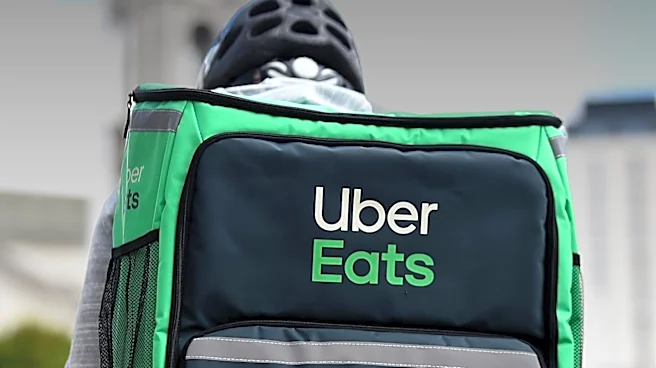
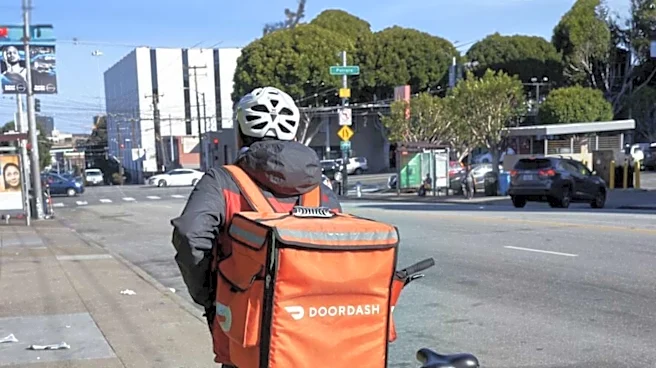
A recent analysis of the Federal Reserve's Survey of Consumer Finances indicates that food delivery apps, such as DoorDash and Uber Eats, are heavily reliant on a small segment of 'superusers.' These individuals, primarily consumers in their mid-40s or younger,
spend hundreds or even thousands of dollars annually on food delivery services. Jeremy Horpedahl, an associate professor of economics at the University of Central Arkansas, highlighted that this demographic likely accounts for the majority of these companies' revenue. The survey, conducted every three years with data collected in 2025 and released in October, gathered information from 5,000 households on their financial habits. The findings suggest that while many consumers do not use delivery services at all, a dedicated group of frequent users continues to drive growth and revenue for these platforms, even as other retail sectors report a pullback in consumer spending.
Why It's Important?
This reliance on a concentrated group of superusers has significant implications for the business strategies of food delivery companies. It underscores the critical importance of customer retention programs, such as DoorDash's DashPass membership, which aim to keep these high-value customers engaged. The data also reveals a potential vulnerability: if these superusers reduce their spending or switch to competitors, the impact on revenue could be substantial. For the broader economy, this trend suggests a divergence in consumer behavior, where discretionary spending on convenience services remains robust among a specific demographic, even as general retail spending softens. This could influence investment decisions and marketing strategies across the consumer services sector, prompting companies to focus more on loyalty and personalized offerings for their most profitable customer segments.
What's Next?
Food delivery companies are likely to intensify their efforts to retain their superuser base through enhanced loyalty programs, personalized promotions, and expanded service offerings, such as adding more grocers and retailers to their platforms. The data also points to an opportunity for these companies to attract first-time users, potentially through targeted marketing campaigns that highlight convenience and value. Furthermore, the competitive landscape may see increased efforts to poach superusers from rival platforms, as even a small shift in this high-spending group could yield significant revenue gains. The ongoing economic environment and consumer spending trends will continue to shape how these companies balance retention strategies with efforts to broaden their customer base beyond the current core of superusers.
Beyond the Headlines
The findings from the Federal Reserve survey highlight a broader societal trend of convenience-driven consumption, particularly among younger demographics. This reliance on a small group of high-spending users also raises questions about market saturation and the long-term sustainability of growth for food delivery apps. While these companies currently thrive on the consistent spending of their superusers, the challenge lies in expanding their market penetration without diluting profitability or alienating their core customer base. This dynamic could lead to further innovation in service models, potentially exploring subscription-based offerings or integrating more deeply into daily routines to capture a wider audience while maintaining the loyalty of their most valuable customers. The ethical implications of encouraging frequent, high-cost consumption patterns among a specific demographic may also become a point of discussion.