





What's Happening?
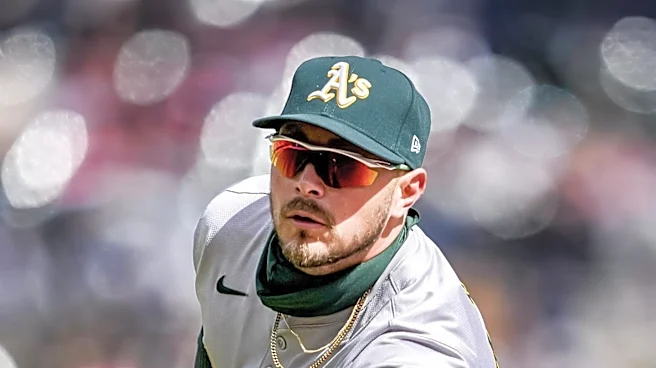
The Oakland Athletics are reportedly considering trading All-Star catcher Shea Langeliers this offseason, according to Jon Morosi of MLB.com. Langeliers, 28, was an All-Star in 2026, hitting .262 with 23 home runs and 58 RBIs in 106 games before a season-ending
meniscus tear. He also hit 31 home runs in 2025. Langeliers is under club control for two more seasons and previously declined an $80 million long-term extension offer from the team. The Athletics are looking to improve their pitching staff, which saw only one starter, JT Ginn, achieve a sub-4.00 ERA last season. Langeliers has been a subject of trade rumors before, drawing significant interest at last season's trade deadline.
Why It's Important?
A potential trade of Shea Langeliers highlights the Oakland Athletics' strategic shift towards addressing their pitching deficiencies. Trading an All-Star player, especially one at a position of scarcity like catcher, indicates a significant commitment to rebuilding or rebalancing the team's roster. For the Athletics, acquiring pitching talent is crucial for future competitiveness, as their current staff performance is a clear weakness. Such a move could provide the necessary assets to strengthen their rotation and bullpen. However, it also means parting with a proven offensive talent and a fan favorite, which could impact team morale and fan engagement. For other MLB teams, Langeliers represents a valuable asset who could significantly boost their lineup and defensive capabilities, making him a highly sought-after player in the trade market.
What's Next?
The Athletics' front office will likely explore Langeliers' trade value in the coming weeks, seeking to maximize their return in terms of pitching prospects or established arms. Given his All-Star status and remaining club control, he is expected to fetch a premium. The team will need to weigh the benefits of acquiring pitching against the loss of a key offensive player. Should a trade occur, the Athletics would then focus on integrating new pitching talent and potentially finding a replacement catcher, either through free agency, another trade, or by promoting prospects like Cole Conn, who is Rule 5 eligible. The decision will set the tone for the team's offseason strategy and its direction for the next few seasons.
Beyond the Headlines
The potential trade of Shea Langeliers reflects a broader trend in baseball where teams with limited financial flexibility often trade valuable players to address systemic weaknesses or to rebuild. This strategy, while sometimes unpopular with fans, is a common approach for smaller market teams to remain competitive. The decision to trade a player who declined a significant extension also underscores the financial realities and contract dynamics in professional sports. It raises questions about player loyalty versus team strategy and the constant balancing act between immediate competitiveness and long-term sustainability. The outcome of this decision could influence how the Athletics approach future contract negotiations and player development.