



What's Happening?
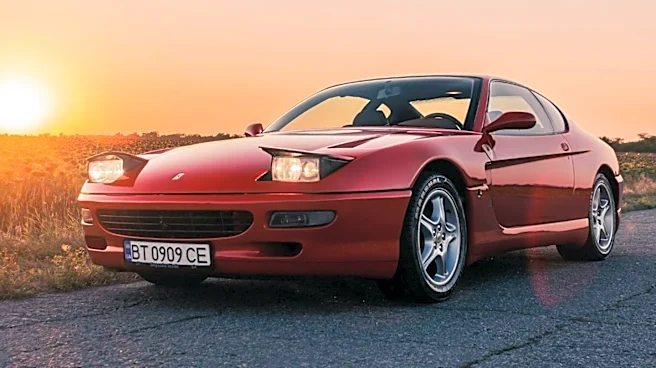
The Ferrari 456, launched in the early 1990s, represents a period in Ferrari's history that the company has largely overlooked, particularly in light of recent product introductions like the Purosangue. The 456 was notable for several unconventional features
for Ferrari, including its use of a four-speed automatic transmission developed in partnership with FF Developments in Livonia, Michigan, and built around General Motors internals. This marked the second instance of Ferrari incorporating General Motors hardware into a twelve-cylinder car's automatic gearbox. Furthermore, the 456 platform was used by Pininfarina to create diverse body styles, including a five-door station wagon (the 456 GT Venice Estate), a sedan (the 456 Venice Saloon), and a convertible (the 456 Venice Convertible), all with Ferrari's express consent, despite the company's traditional stance against such vehicles. The car also featured a unique construction method using Feran foil to bond steel and aluminum panels, and an engine derived from the Dino V6 architecture, rather than the traditional V12.
Why It's Important?
This historical account of the Ferrari 456 is important for U.S. consumers and automotive enthusiasts as it reveals a previously downplayed aspect of Ferrari's product development, particularly its reliance on American engineering. The integration of General Motors components into a high-performance Ferrari highlights a pragmatic approach to engineering that transcends national boundaries and brand purism. For the U.S. market, the 456 was officially sold through authorized channels, unlike some earlier Ferrari models, making it a more accessible and less complicated purchase for American buyers. The existence of diverse body styles, including a station wagon and sedan, challenges the perception of Ferrari as exclusively a manufacturer of two-door sports cars, offering a broader historical context for current models like the Purosangue. This history also provides a unique perspective on the evolution of automotive manufacturing and the global supply chain, where even luxury brands leverage international expertise and components.
What's Next?
While the Ferrari 456 is no longer in production, its historical significance continues to influence perceptions of the brand, especially with the introduction of new models that deviate from traditional Ferrari archetypes. The ongoing discussion around the Purosangue, for instance, will likely draw parallels to the 456's unacknowledged past, prompting a re-evaluation of what constitutes a 'true' Ferrari. For collectors and enthusiasts, the unique features of the 456, such as its Michigan-built automatic gearbox and the rare Pininfarina-designed variants, may see increased interest and value as its historical context becomes more widely recognized. The narrative surrounding the 456 could also encourage Ferrari to be more transparent about its past engineering decisions and product diversification, potentially shaping future marketing and brand storytelling efforts.
Beyond the Headlines
The story of the Ferrari 456 delves into the deeper implications of brand identity, innovation, and market adaptation within the luxury automotive sector. It exposes the tension between maintaining a purist image and responding to market demands or engineering efficiencies. The fact that Ferrari allowed Pininfarina to create station wagons and sedans, and incorporated American-made components, suggests a more flexible and less dogmatic approach than often portrayed. This challenges the romanticized notion of an entirely in-house, uncompromising Italian design and engineering process. The 456 serves as a case study in how even iconic brands can selectively curate their history, highlighting successes while downplaying deviations from their core narrative. This selective memory can impact consumer perception and the long-term valuation of certain models, making the 'unwritten' history of cars like the 456 particularly compelling for understanding the true evolution of automotive brands.