

What's Happening?
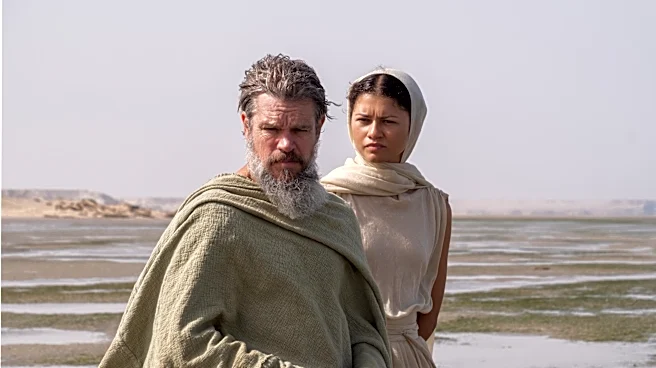
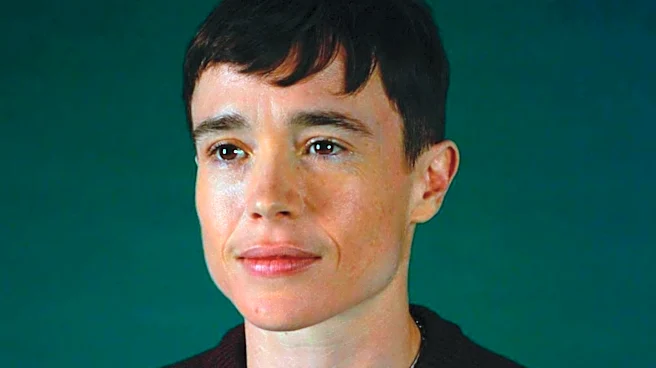
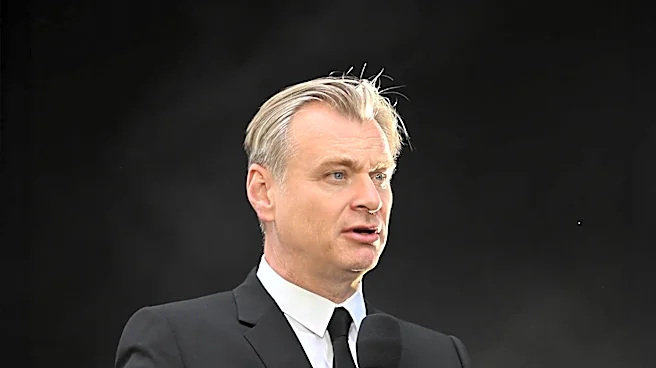
Christopher Nolan's latest film, 'The Odyssey,' has sparked controversy due to its casting choices. The film, which is an adaptation of Homer's epic, features Lupita Nyong'o as Helen of Troy and Elliot Page as Sinon. Critics, including Elon Musk, have
voiced concerns over the casting, arguing it strays from the traditional depictions of these characters. Despite the backlash, the film has been a commercial success, grossing over $1.1 billion globally. The debate highlights ongoing discussions about authenticity and representation in adaptations of classic works.
Why It's Important?
The controversy surrounding 'The Odyssey' underscores the broader cultural debate about representation and authenticity in media. Casting decisions in adaptations of classic literature often spark discussions about fidelity to source material versus modern reinterpretations. This situation reflects a growing trend in Hollywood to diversify casting, which can lead to both praise and criticism. The film's financial success despite the backlash suggests that audiences may be more open to diverse interpretations than some critics assume. This could influence future casting decisions and adaptations in the film industry.
What's Next?
As 'The Odyssey' continues its successful run, it remains to be seen how the film industry will respond to the ongoing debate about representation. Filmmakers may feel encouraged to pursue more diverse casting, while also considering the potential for backlash. The discussion may also prompt audiences and critics to re-evaluate their expectations of authenticity in adaptations. Additionally, Elon Musk's promise of a 'historically accurate' adaptation could further fuel the conversation about fidelity and creative license in storytelling.
Beyond the Headlines
The debate over 'The Odyssey' highlights deeper issues about cultural ownership and the evolution of storytelling. Homer's epic has been adapted and reinterpreted countless times, each version reflecting the values and perspectives of its time. This latest adaptation raises questions about who gets to tell these stories and how they should be told. It also challenges the notion of a single 'authentic' version of a story, suggesting that reinterpretation is an inherent part of storytelling's evolution.