
What's Happening?
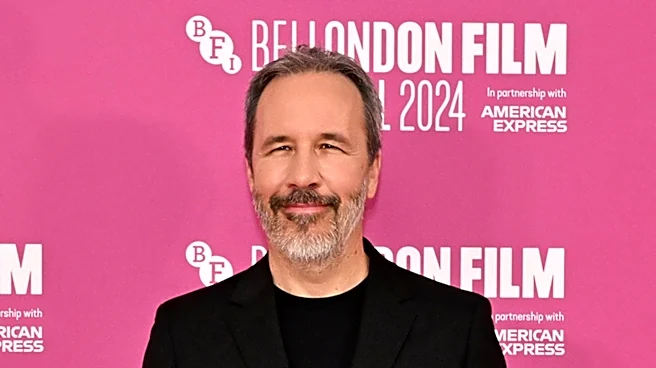
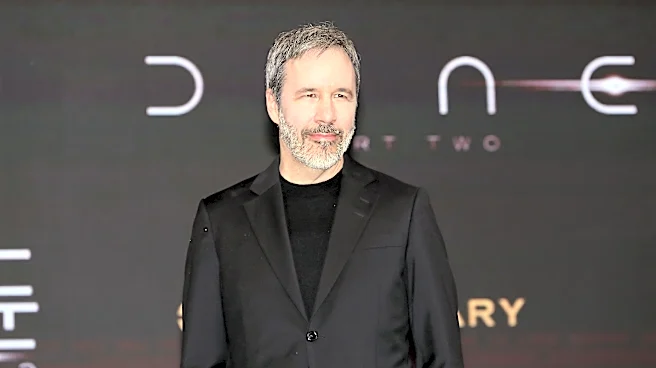
Director Denis Villeneuve is set to release 'Dune: Part Three,' the final installment of his acclaimed 'Dune' trilogy. The film, which Villeneuve describes as 'the most epic and yet the most personal film I’ve
made,' will premiere worldwide in South Korea on December 16. 'Dune: Part Three' focuses on the conflict between Paul (Timothée Chalamet), who becomes a tyrant after gaining absolute power, and Chani (Zendaya), a desert warrior who opposes him. The narrative explores their diverging fates amidst a universe-shaking war. Villeneuve has a history of directing critically and commercially successful films, including 'Incendies,' 'Sicario,' 'Arrival,' and 'Blade Runner 2049.' The first two 'Dune' films garnered eight Academy Awards and collectively grossed over $1.1 billion worldwide, setting a new benchmark for sci-fi blockbusters. Advance ticket sales for 'Dune: Part Three' in South Korea have been exceptionally strong, topping booking rates within hours and surpassing 100,000 tickets in two days.
Why It's Important?
The conclusion of Denis Villeneuve's 'Dune' trilogy is a significant event in the film industry, particularly for the science fiction genre. The success of the previous installments has demonstrated that complex, large-scale sci-fi adaptations can achieve both critical acclaim and massive box office returns, potentially influencing future studio decisions regarding similar projects. Villeneuve's approach, which prioritizes deep character exploration over mere spectacle, could further solidify a trend towards more thoughtful and emotionally resonant blockbusters. The high anticipation and strong advance ticket sales indicate a robust global audience for sophisticated genre cinema, which could encourage investment in original and ambitious storytelling. The film's release also highlights the growing importance of international markets, with South Korea hosting the worldwide premiere, reflecting shifts in global film distribution strategies.
What's Next?
Following its worldwide premiere in South Korea on December 16, 'Dune: Part Three' will likely roll out to other international markets, including the U.S. The film's performance will be closely watched by industry analysts to gauge its box office potential and critical reception, which could impact future projects for Villeneuve and the cast. The conclusion of the trilogy may also spark renewed interest in Frank Herbert's original 'Dune' novels, potentially leading to increased book sales and further exploration of the 'Dune' universe in other media, such as television series or video games. The critical discourse surrounding the film will likely focus on how Villeneuve resolves the complex themes of power, destiny, and tyranny, and whether it successfully delivers a satisfying conclusion to the epic saga.
Beyond the Headlines
The 'Dune' trilogy, particularly with its concluding chapter, delves into profound ethical and philosophical questions about leadership, free will, and the corrupting nature of absolute power. Paul Atreides' transformation into a tyrannical figure, despite his initial heroic portrayal, challenges traditional narrative archetypes and forces audiences to confront the complexities of messianic figures. This exploration resonates with contemporary societal concerns about authoritarianism and the responsibilities of those in power. Furthermore, Villeneuve's commitment to adapting a dense literary work with artistic integrity, rather than simplifying it for mass appeal, underscores a broader cultural appreciation for intellectual depth in popular entertainment. The trilogy's success could inspire a re-evaluation of what constitutes a 'blockbuster,' pushing studios to invest in projects that are both visually spectacular and intellectually stimulating, thereby elevating the artistic standards of mainstream cinema.