
What's Happening?
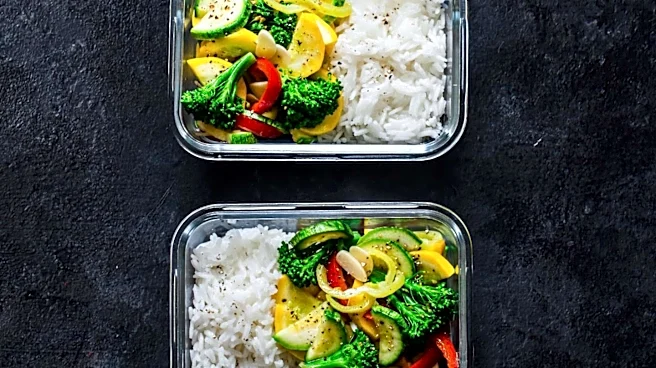
Meal preparation involves planning and cooking meals in advance to save time and promote balanced nutrition. Various approaches to meal prep are highlighted, including detailed weekly meal plans and practical
frameworks. For instance, a meal plan for the week of September 21, 2026, features diverse recipes such as Greek Roasted Chicken and Cowboy Casserole, offering specific preparation tips like chopping vegetables the night before or assembling casseroles in advance. Customization is a key aspect, allowing individuals to swap ingredients based on availability or dietary preferences, such as using sweet potatoes instead of regular potatoes or different ground meats. Another example includes making pesto ahead of time for future use or preparing BBQ chicken drumsticks with a spice rub up to 24 hours prior to baking. These strategies aim to simplify the cooking process and reduce daily effort.
Why It's Important?
The emphasis on meal preparation reflects a growing trend among U.S. consumers seeking to manage busy schedules while maintaining healthy eating habits. By preparing meals in advance, individuals can significantly reduce daily cooking time, which is particularly beneficial for those with demanding work or family commitments. This approach also supports healthier dietary choices by allowing for planned, balanced meals, potentially reducing reliance on fast food or less nutritious options. The ability to customize recipes ensures that meal prep remains adaptable to various tastes, dietary restrictions, and budget considerations, making it a practical solution for a broad demographic. Furthermore, meal prep can lead to cost savings by enabling bulk purchasing and minimizing food waste, impacting household budgets positively.
What's Next?
The continued evolution of meal prep is likely to see further integration of technology, such as meal planning apps and subscription services that offer pre-portioned ingredients or fully prepared meals. There may also be an increase in specialized meal prep options catering to specific dietary needs, such as gluten-free, vegan, or low-carb diets. Educational initiatives, like workshops focusing on meal planning frameworks, are expected to continue empowering individuals with the skills needed for effective meal prep. As consumer demand for convenience and health-conscious eating grows, businesses in the food industry will likely expand their offerings to support various meal preparation styles, from DIY recipe kits to ready-to-heat meals delivered directly to homes.
Beyond the Headlines
Beyond the immediate benefits of time-saving and healthier eating, meal prep fosters a more mindful approach to food consumption. It encourages individuals to consider nutritional content, portion sizes, and ingredient sourcing, potentially leading to a deeper understanding of their dietary needs. This practice can also reduce food waste, contributing to environmental sustainability by minimizing discarded perishables. On a broader societal level, widespread adoption of meal prep could influence public health outcomes by promoting consistent access to nutritious meals, potentially lowering rates of diet-related illnesses. The cultural shift towards valuing prepared meals also highlights a redefinition of convenience, moving beyond instant gratification to a more structured and health-oriented lifestyle.