
What's Happening?
GameStop CEO Ryan Cohen has voiced strong concerns regarding the video game industry's increasing shift towards digital-only game releases. In an interview with Bloomberg, Cohen stated that consumers should
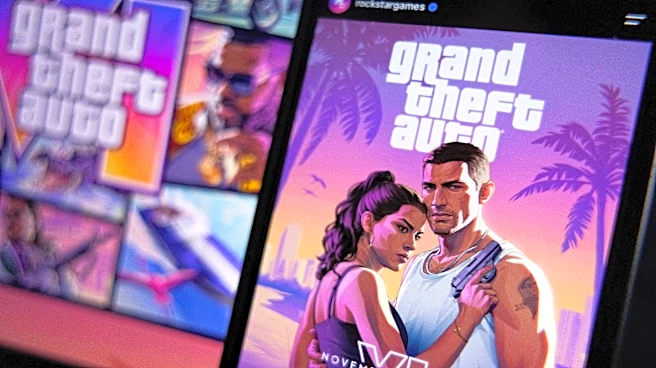
retain the ability to sell, trade, or lend games they purchase, a right he believes is undermined by the digital-only trend. He specifically highlighted the recent release of Grand Theft Auto VI, which, despite being sold in boxed retail copies, only contains a download code, necessitating an internet connection for installation. Cohen argues that publishers favor digital distribution because it eliminates the used game market, thereby reducing competition for new game sales. This move, according to Cohen, negatively impacts both consumers by limiting their ownership rights and GameStop's business model, which historically benefited from the trade-in and resale of physical games. Despite these criticisms, GameStop has adapted, with collectibles now accounting for a significant portion of its net sales, surpassing pre-owned and refurbished products.
Why It's Important?
The shift to digital-only game releases carries significant implications for consumer rights, the retail gaming industry, and the broader concept of digital ownership. For consumers, the inability to resell or trade games effectively transforms a purchase into a revocable license, diminishing the value of their investment. This trend also impacts brick-and-mortar retailers like GameStop, which have historically relied on the physical media market and used game sales as a core revenue stream. While GameStop has diversified its business, the continued move away from physical discs by major publishers like Rockstar and platform holders like Sony (which plans to end disc production for new PlayStation games by January 2028) poses a long-term challenge to its traditional model. The debate also touches upon anti-competitive practices, as publishers gain more control over distribution and pricing by eliminating the secondary market for games.
What's Next?
The discussion around digital ownership and physical media is likely to intensify, especially with legislative efforts like the proposed 'Power To The Players Act' in New York. This act, championed by Congressman Ritchie Torres, aims to direct the Federal Trade Commission to establish rules ensuring that game purchases confer actual ownership rather than revocable licenses, and that online games include an offline mode before server shutdowns. While such legislation primarily targets licensing and server longevity rather than mandating physical media, it reflects a growing consumer and political pushback against the perceived erosion of ownership rights in the digital age. However, the industry's trajectory, particularly with Sony's plans to cease disc production, suggests that the move towards digital-only distribution is a deeply entrenched trend that may be difficult to reverse through legislation alone, especially concerning physical media production.
Beyond the Headlines
The debate over digital-only games extends beyond immediate consumer and business impacts, touching on fundamental questions of digital property rights and preservation. In an increasingly digital world, the concept of 'owning' a digital product is fluid, often equating to a license that can be revoked or rendered useless if servers are shut down. This raises concerns about the long-term accessibility and preservation of video game history, as digital-only titles are vulnerable to being lost if publishers cease support or go out of business. The shift also highlights the power dynamics between content creators, platform holders, and consumers, with publishers gaining greater control over the entire lifecycle of a game. This could lead to further discussions on digital rights management, consumer protection in digital marketplaces, and the role of regulation in ensuring fair practices in the evolving digital entertainment landscape.